İlanla · Case study · 4 min read
İlanla: a gaming marketplace for buying and selling in-game items, accounts and currency
İlanla is a Turkish digital marketplace where gamers buy and sell in-game items, accounts and currencies for titles like Knight Online, Metin2, PUBG and CS2. I designed the brand and more than 110 responsive screens, from sign-up and listings to seller stores, the control panel and checkout, with trust built into every step.
- User Experience Research
- User Interface Design
- Design System
- Brand & Logo Design
At a glance
Challenge
Gamers trading items and accounts for real money need to trust strangers, and sellers need real tools to run a store.
Solution
A game-first marketplace with verification badges, ratings and seller stores, plus a control panel, cart and listing flow, in light and dark themes.
Outcome
110+ responsive screens covering the whole marketplace, from authentication to fulfilment, for both buyers and sellers.
Deliverables
- Brand identity & logo
- 110+ responsive screens
- Marketplace & product pages
- Seller stores & control panel
- Cart, listings & discounts
- Design system, light + dark
Overview
İlanla is a Turkish digital marketplace where gamers buy and sell in-game items, accounts, currencies and e-pins for titles like Knight Online, Metin2, PUBG, CS2 and League of Legends. In 2025 its homepage presented it as “Türkiye’s most advanced digital marketplace” while the new site was being built. [1]
I designed that new marketplace through my studio, Beew, over about four months in 2025: a new brand and more than 110 responsive screens in Figma, covering buyers and sellers from sign-up to checkout, in both light and dark themes.
The challenge
Trading game items and accounts means paying a stranger for something digital. A marketplace in this space lives or dies on trust, and it has to serve two very different users: buyers hunting for a deal and sellers running a small business.
- Make buying from unknown sellers feel safe, with verification, ratings and support.
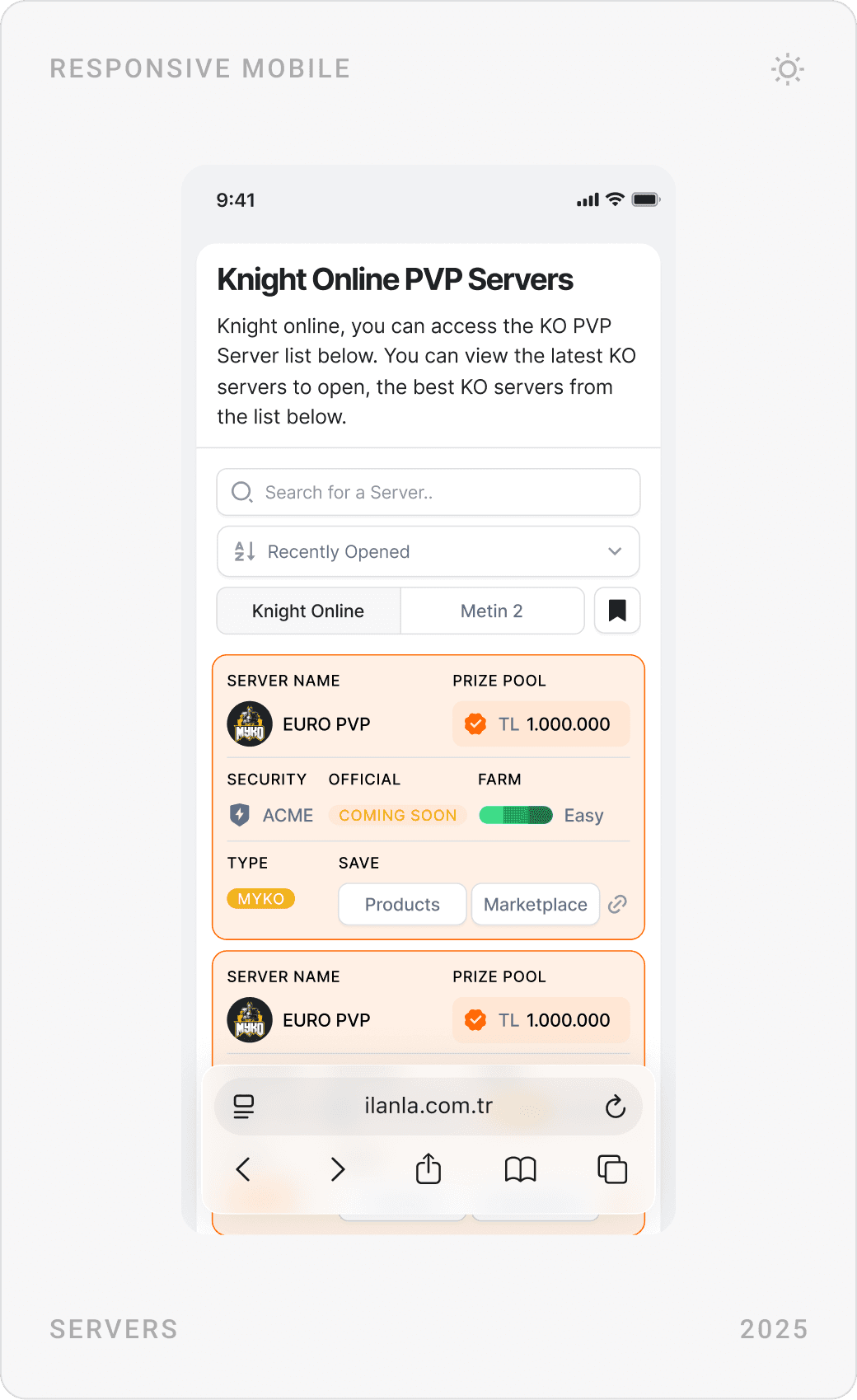
- Organise a huge, varied catalogue, items, accounts, currencies, e-pins, social media services, across many games.
- Give sellers the tools to list, price, promote and track sales without leaving the platform.
- Look and feel like a product built for gamers, on desktop and mobile.
Goals
- Design a scalable marketplace for in-game items and digital assets.
- Let gamers securely buy and sell items for titles like Knight Online, Metin2, PUBG and CS2.
- Build trust with verified sellers, rating systems and responsive support.
- Create a brand and a design system that work in light and dark themes.
Approach
1. Trust on every card
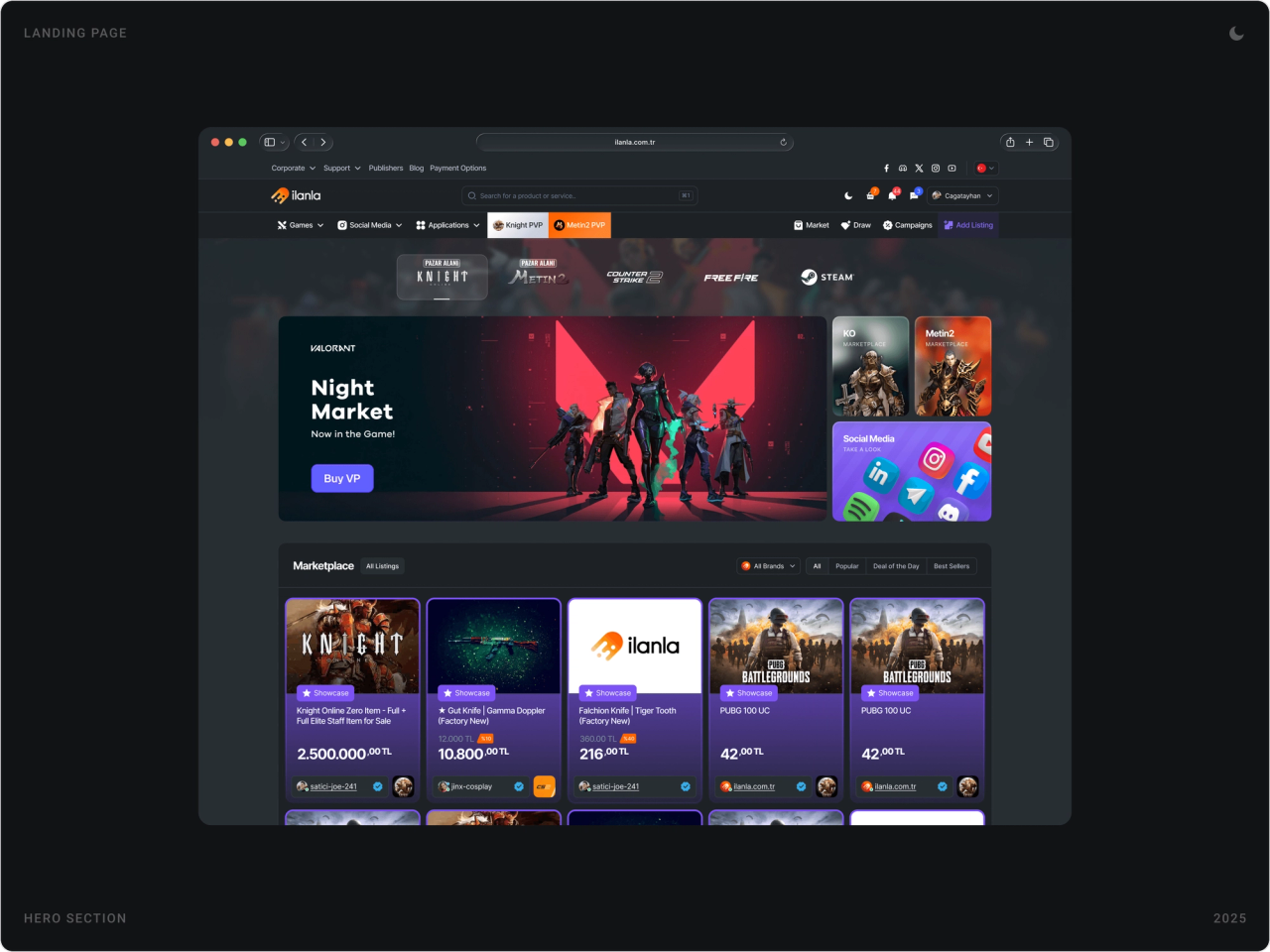
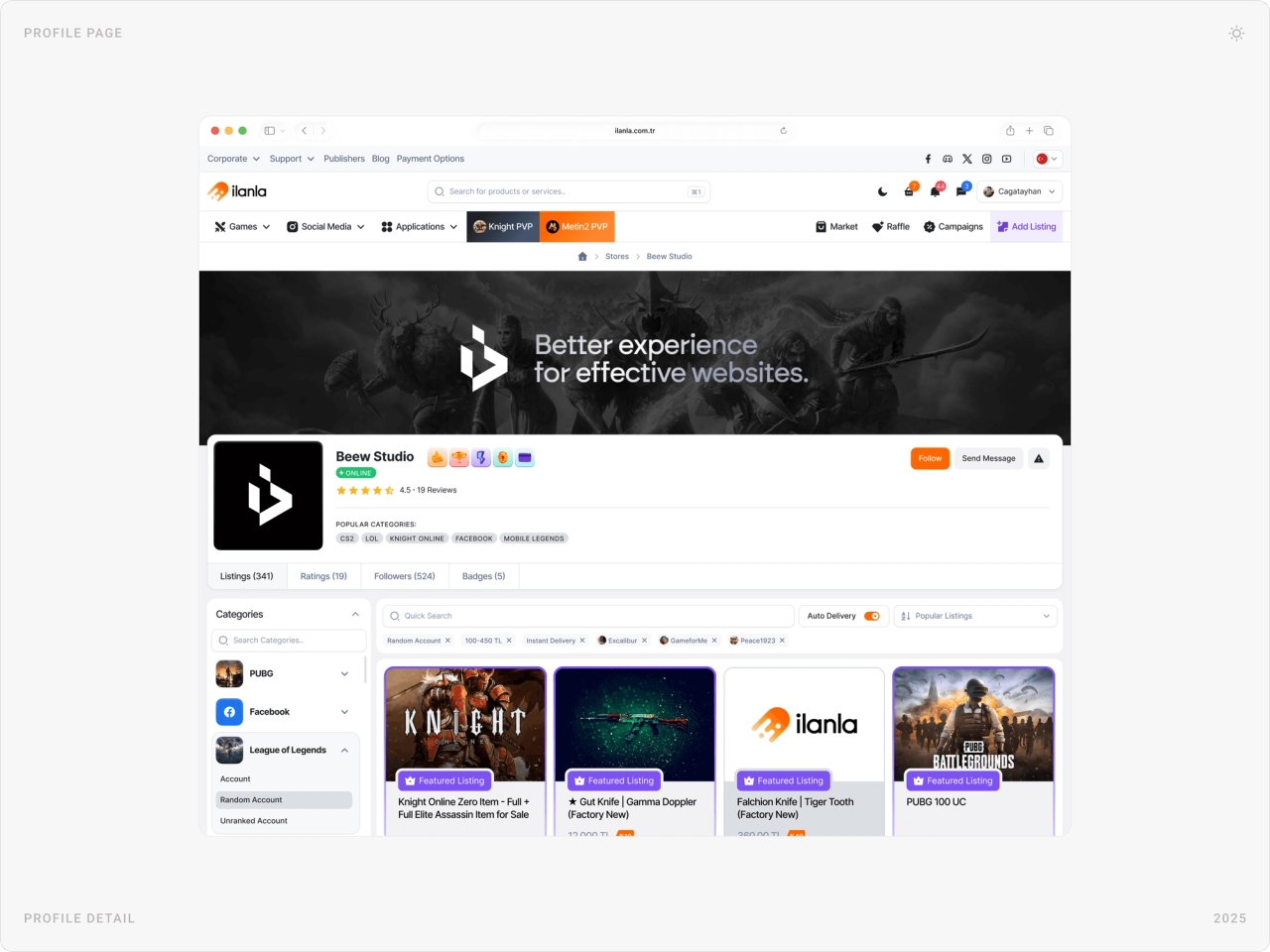
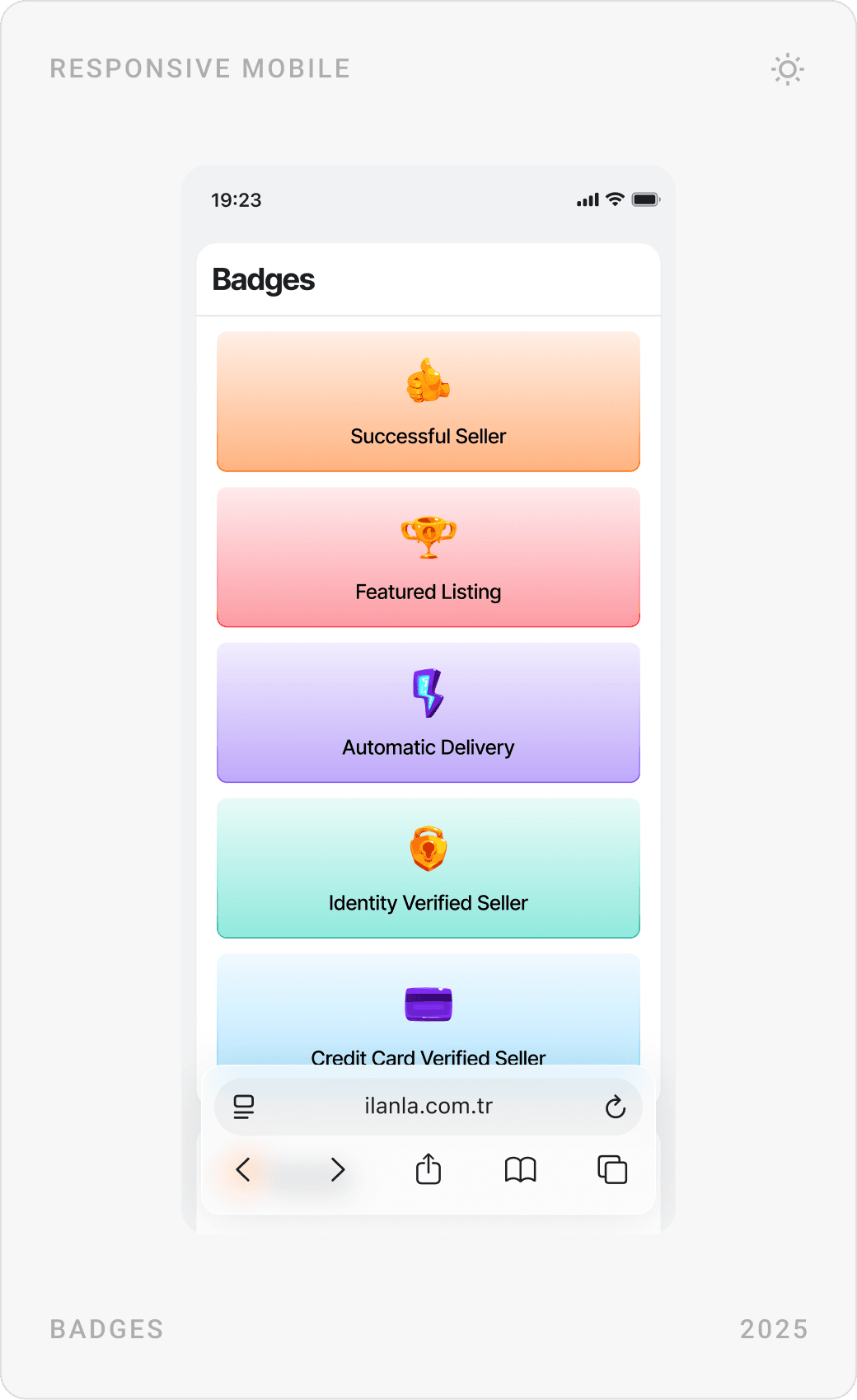
Buyers decide on the listing card, not the profile page. So every card carries the seller, the price, tags like “Showcase” and verification badges, and stores show ratings, reviews and badges such as Successful Seller, Automatic Delivery and Identity Verified Seller.
2. Organise by game first
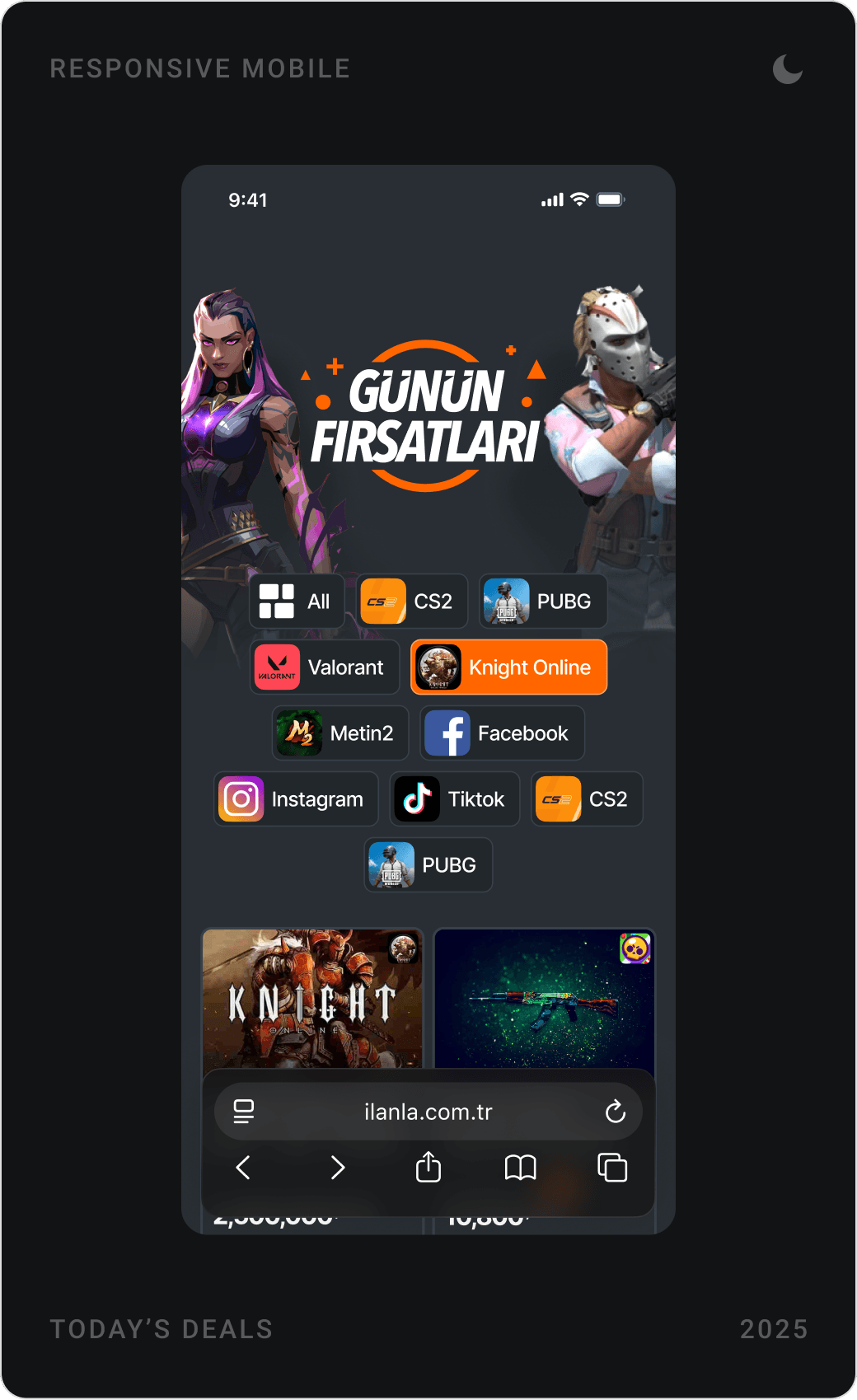
Gamers think in titles, not product types. Navigation, category chips and filters start from the game, Knight Online, Metin2, PUBG, CS2, LoL, Valorant, then narrow down by item type, brand, popularity or deal of the day.
3. Two sides, one system
Buyers and sellers use the same components: listing cards, badges, stats and sheets. A seller’s control panel reuses what buyers already know, so switching roles never feels like opening a different product.
4. Gamer-native, in light and dark
Game art, an energetic orange accent, countdowns and badges make the marketplace feel at home next to the games it serves. Every screen works in a dark theme for long sessions and a light theme for reading and storefronts.
The solution
Brand identity
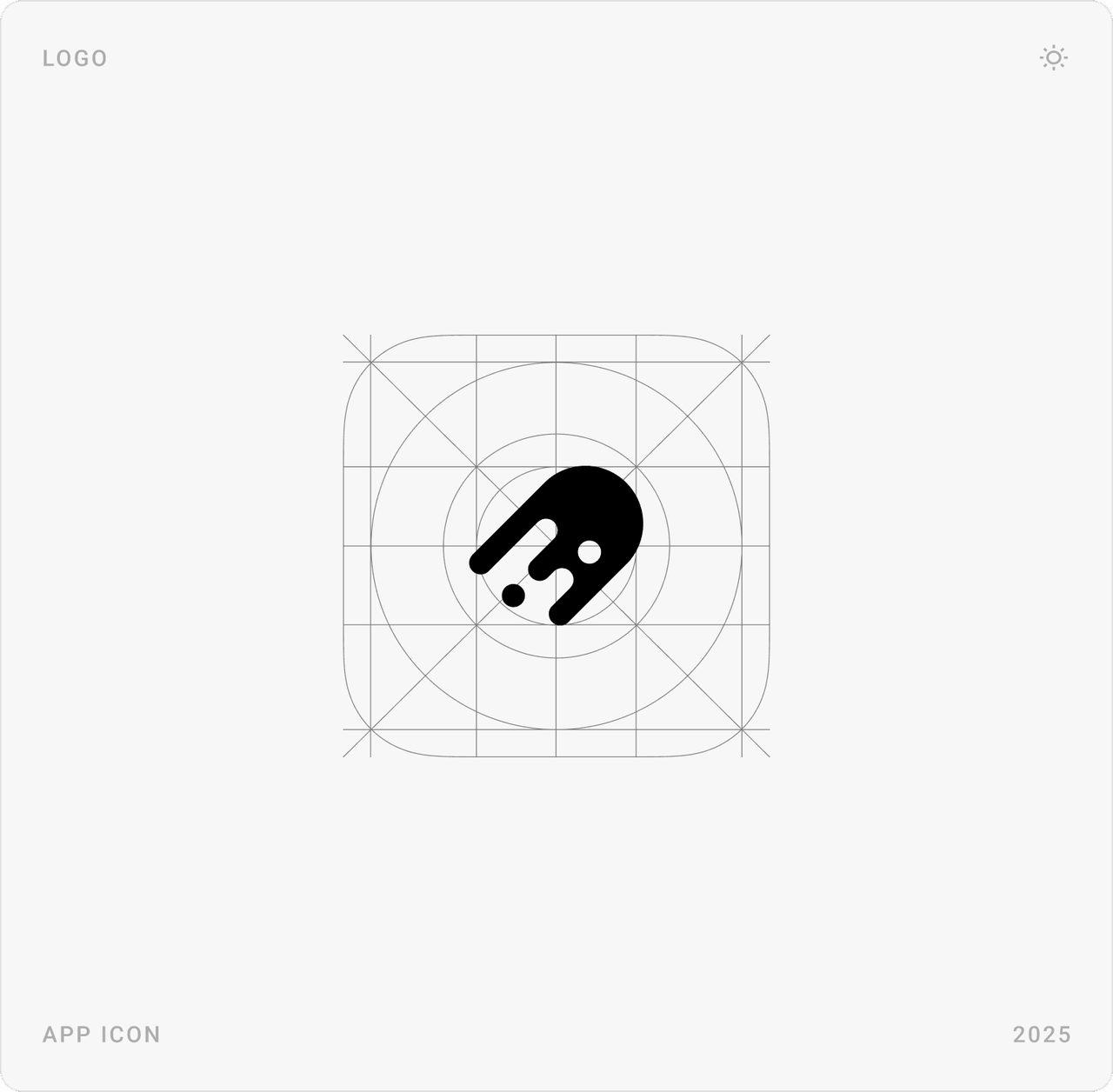
The İlanla mark is a fast, rocket-like symbol in an orange gradient, built on an icon grid so it works as a logo, an app icon and a favicon.
Homepage and daily deals
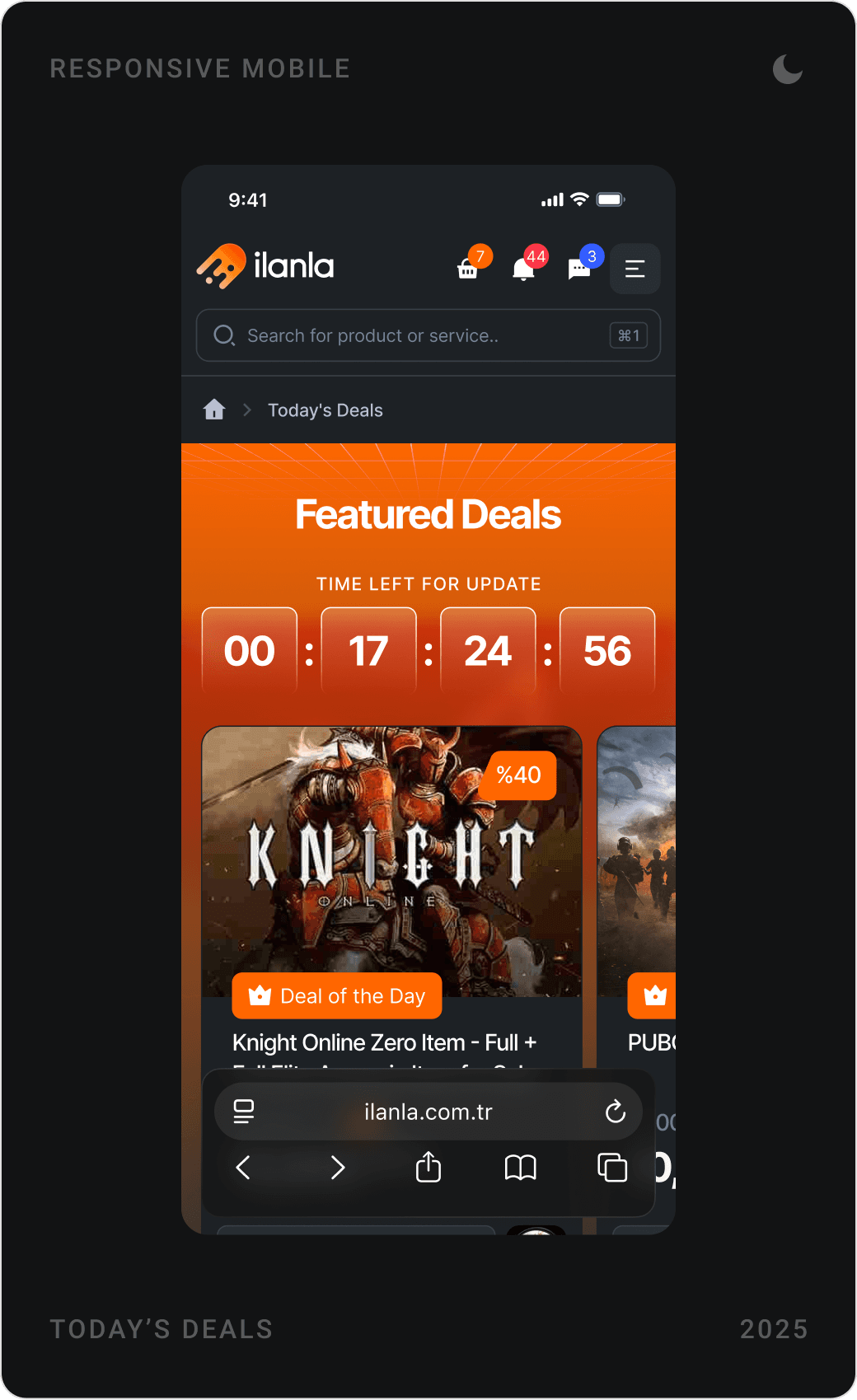
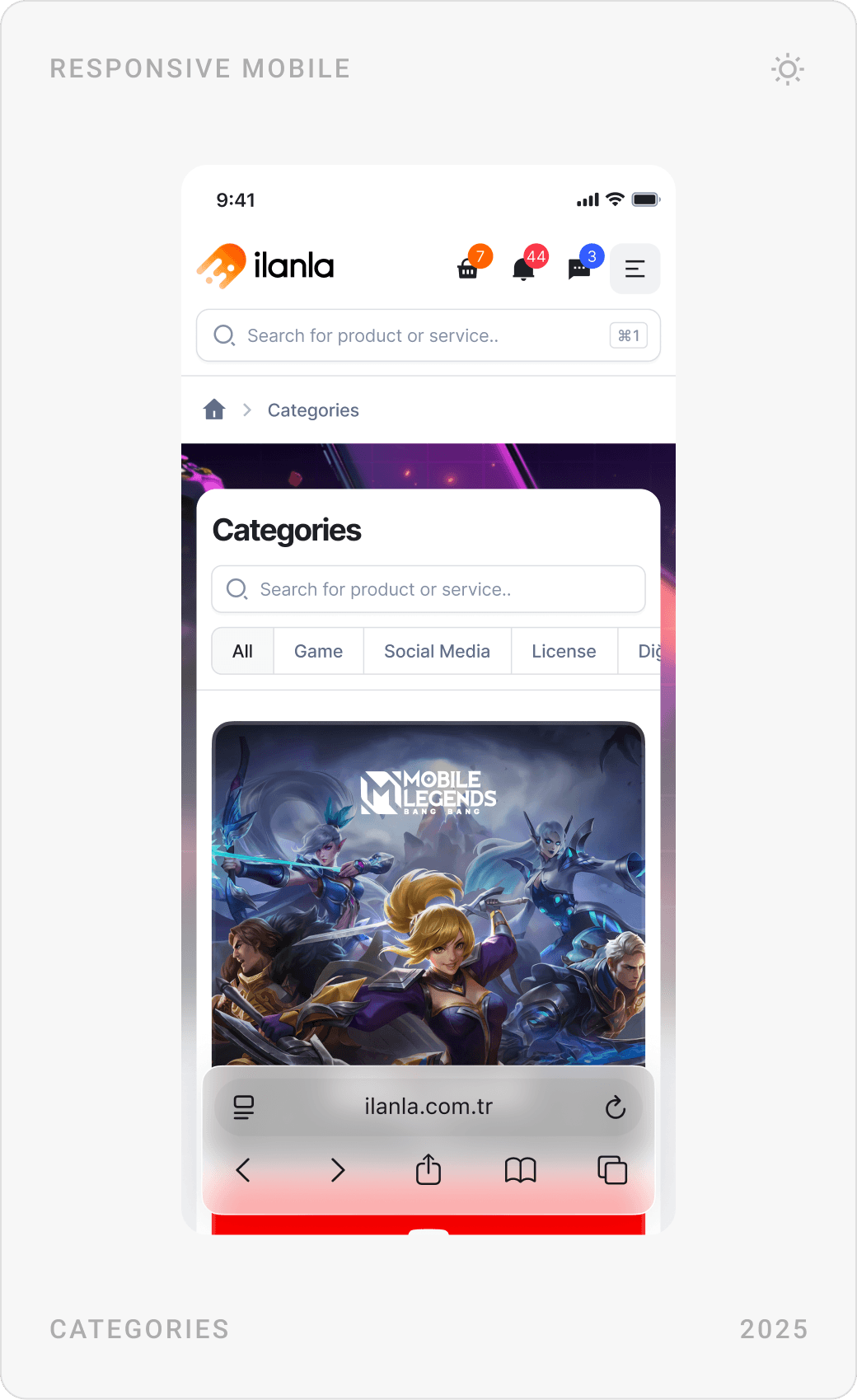
The homepage opens with game shortcuts and a large featured banner, then goes straight into the marketplace grid. On mobile, “Today’s Deals” uses a live countdown to the next update and colourful game chips to jump into a category.
Categories and product pages
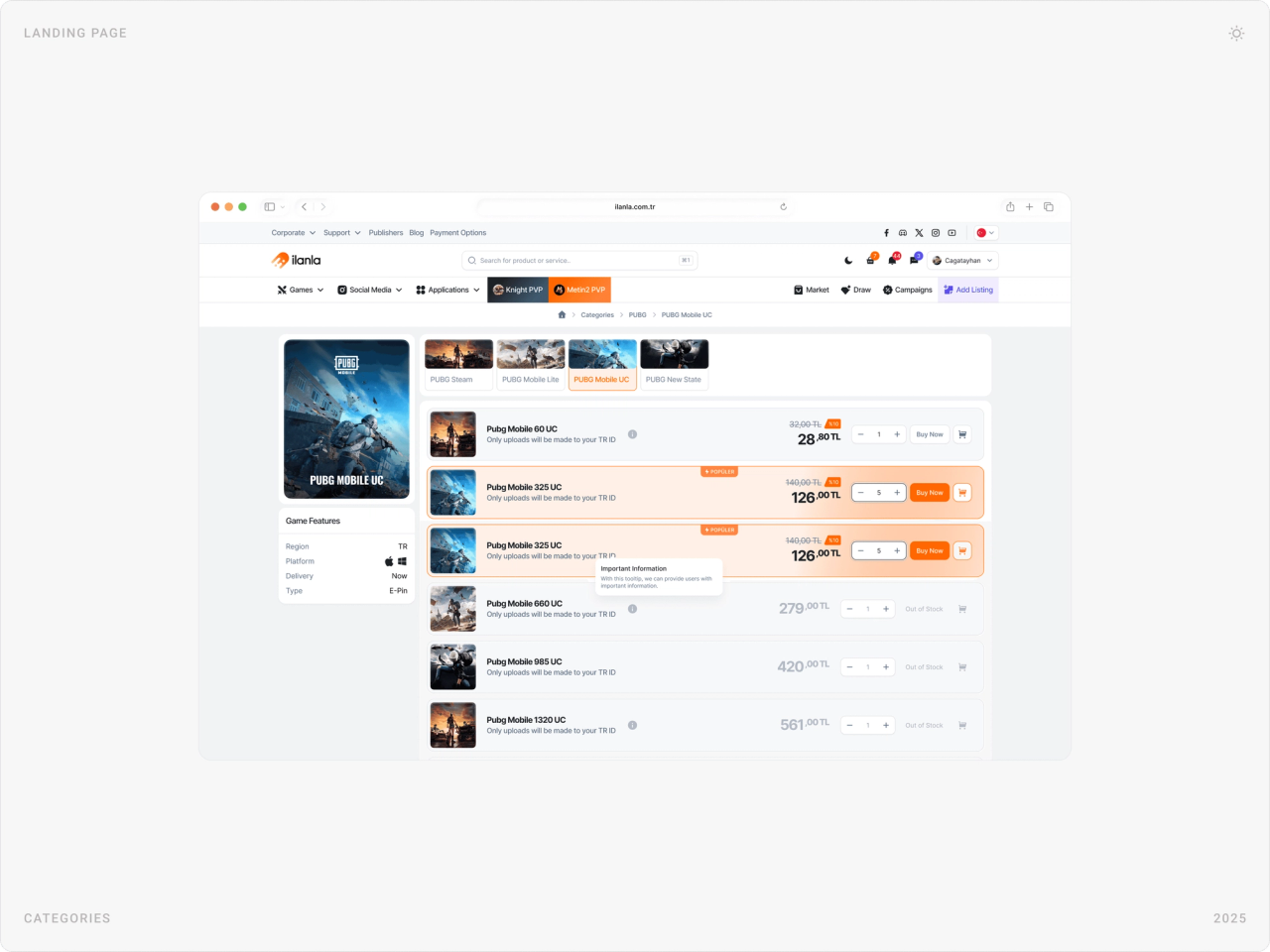
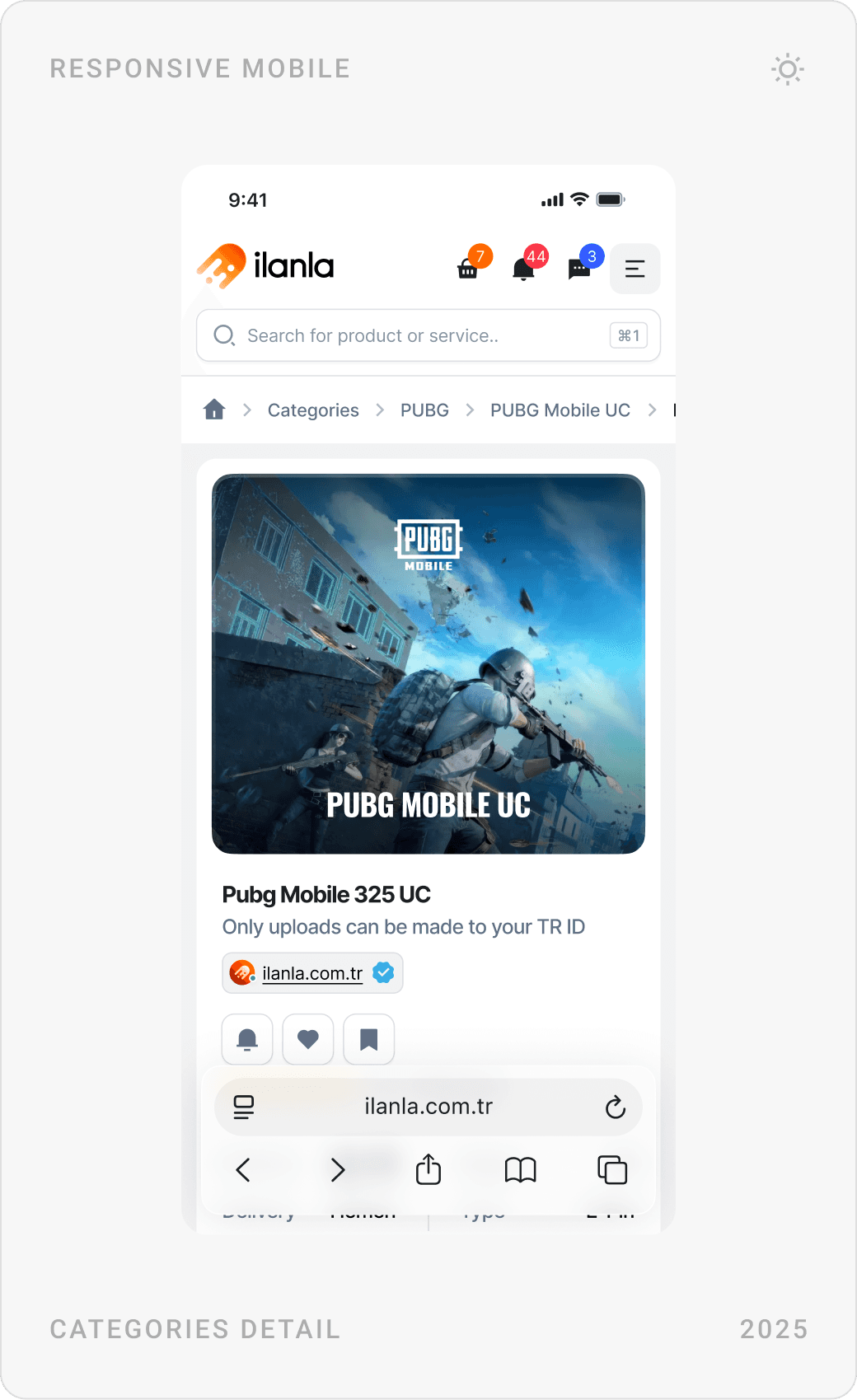
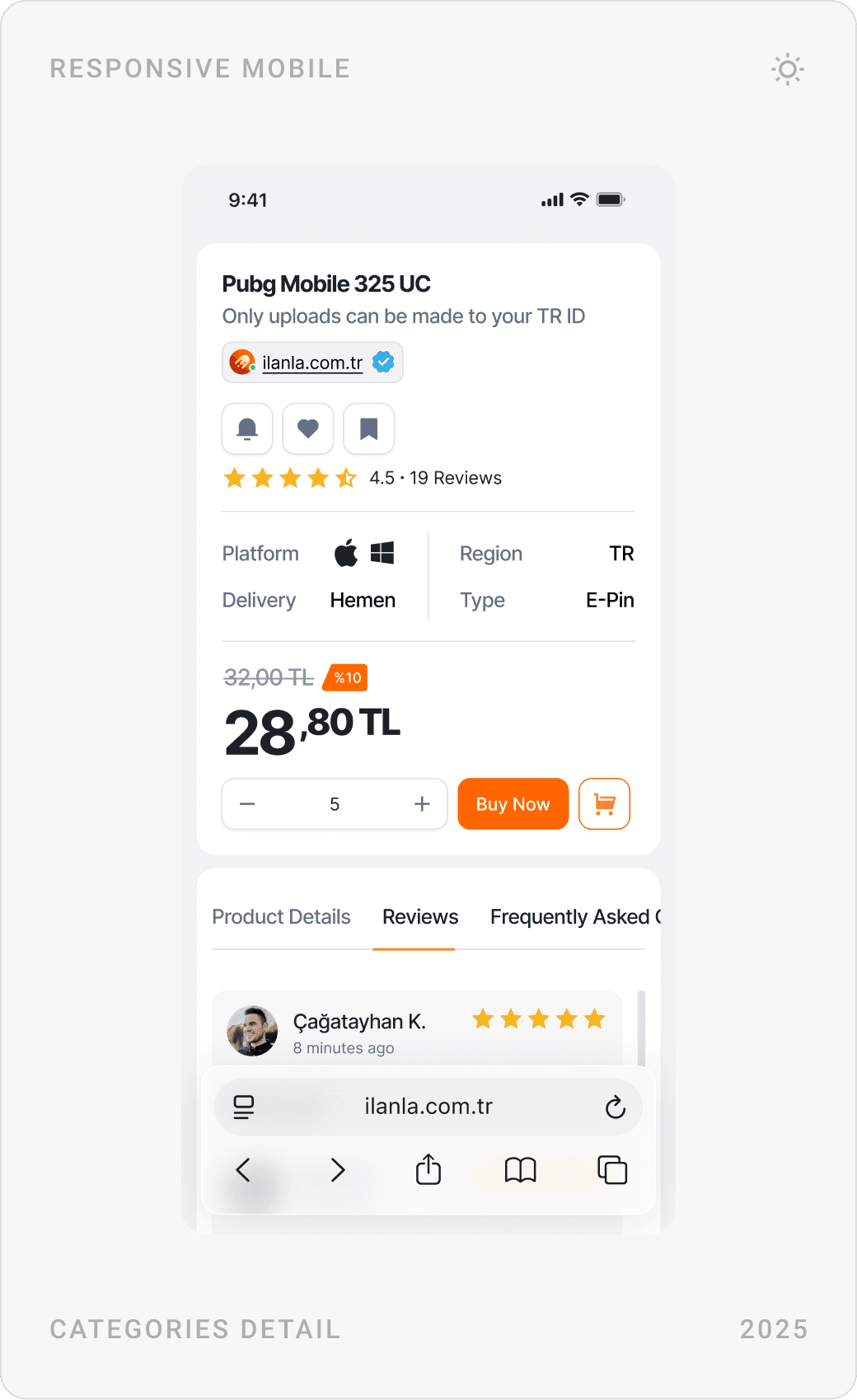
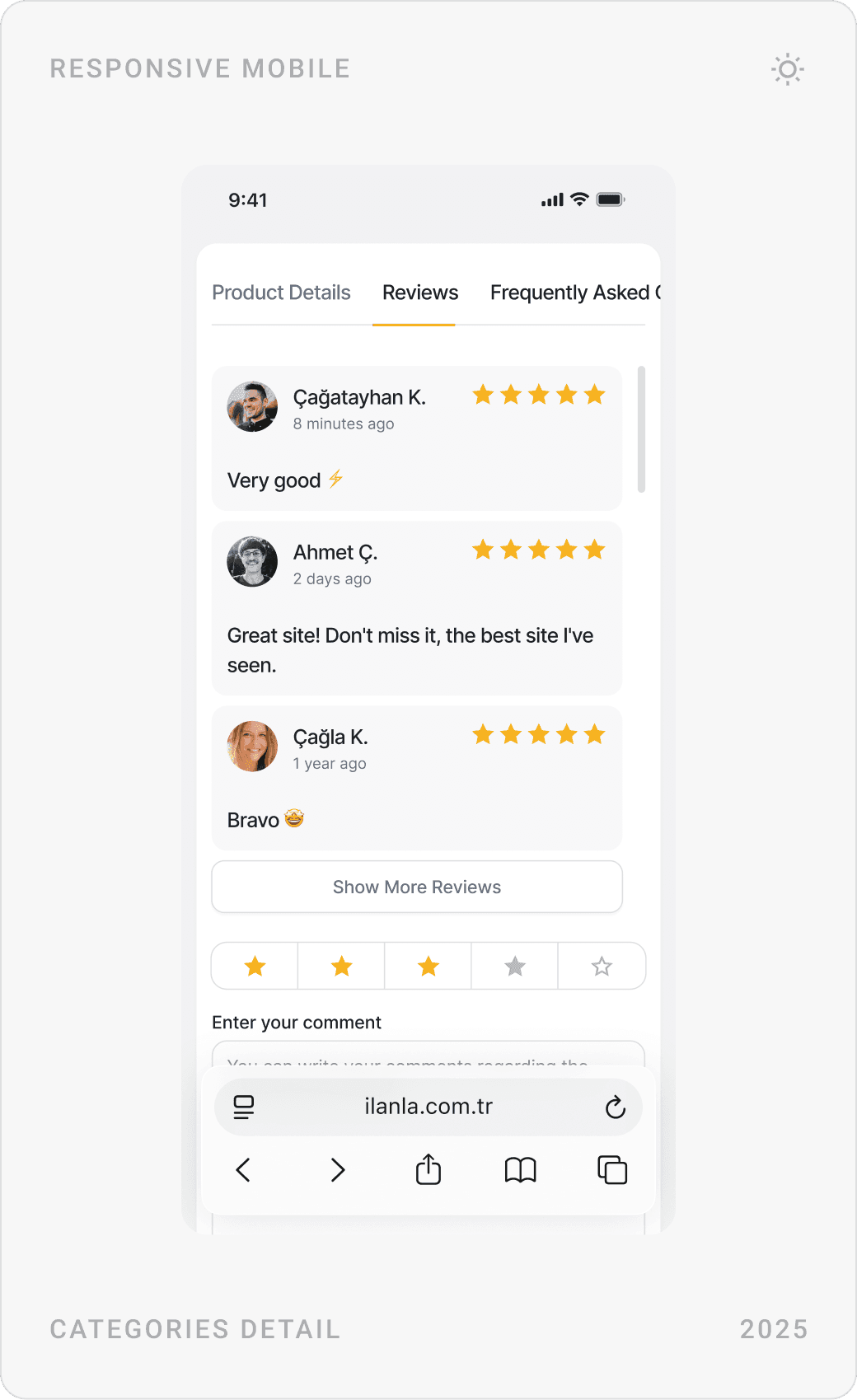
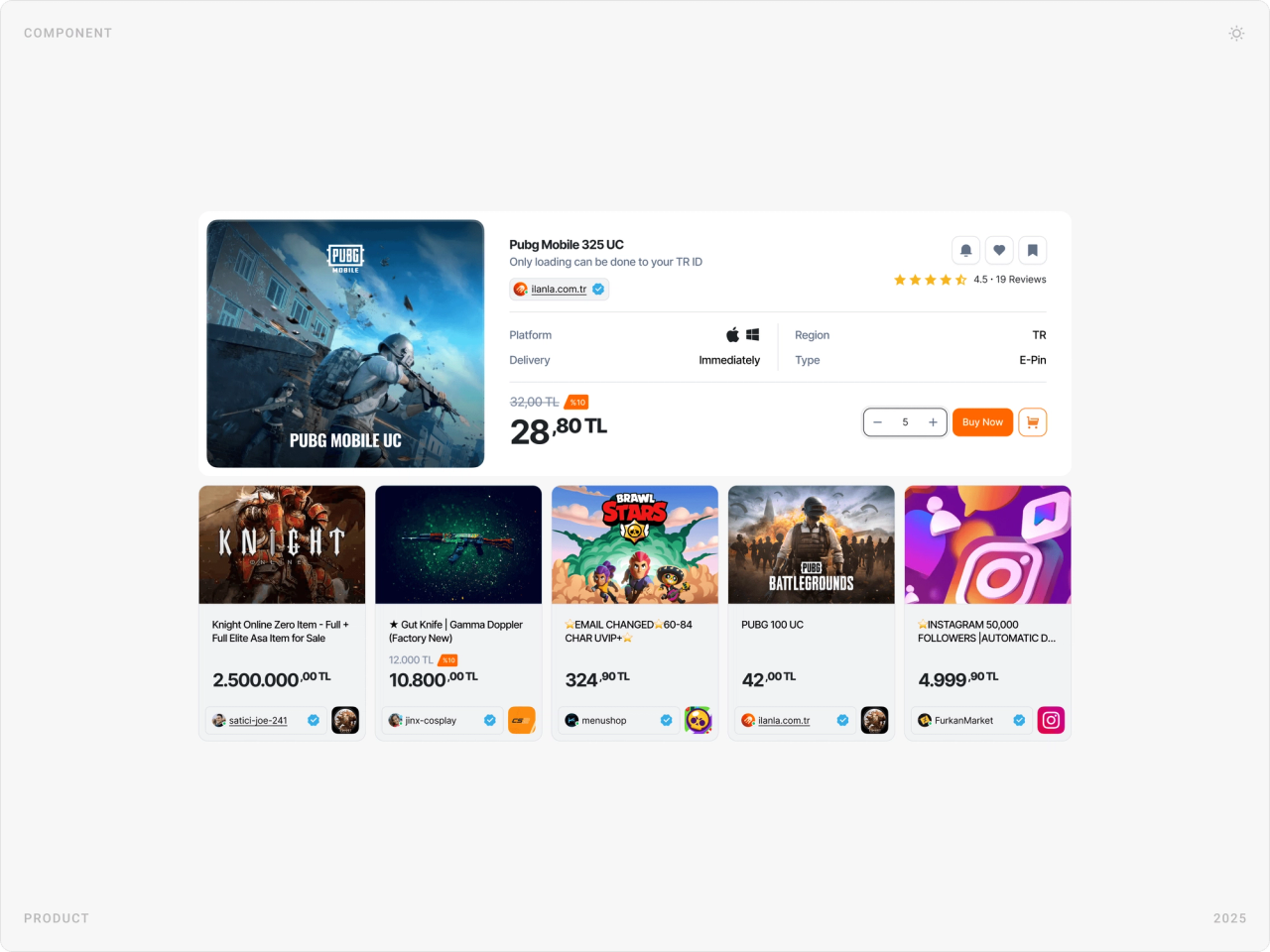
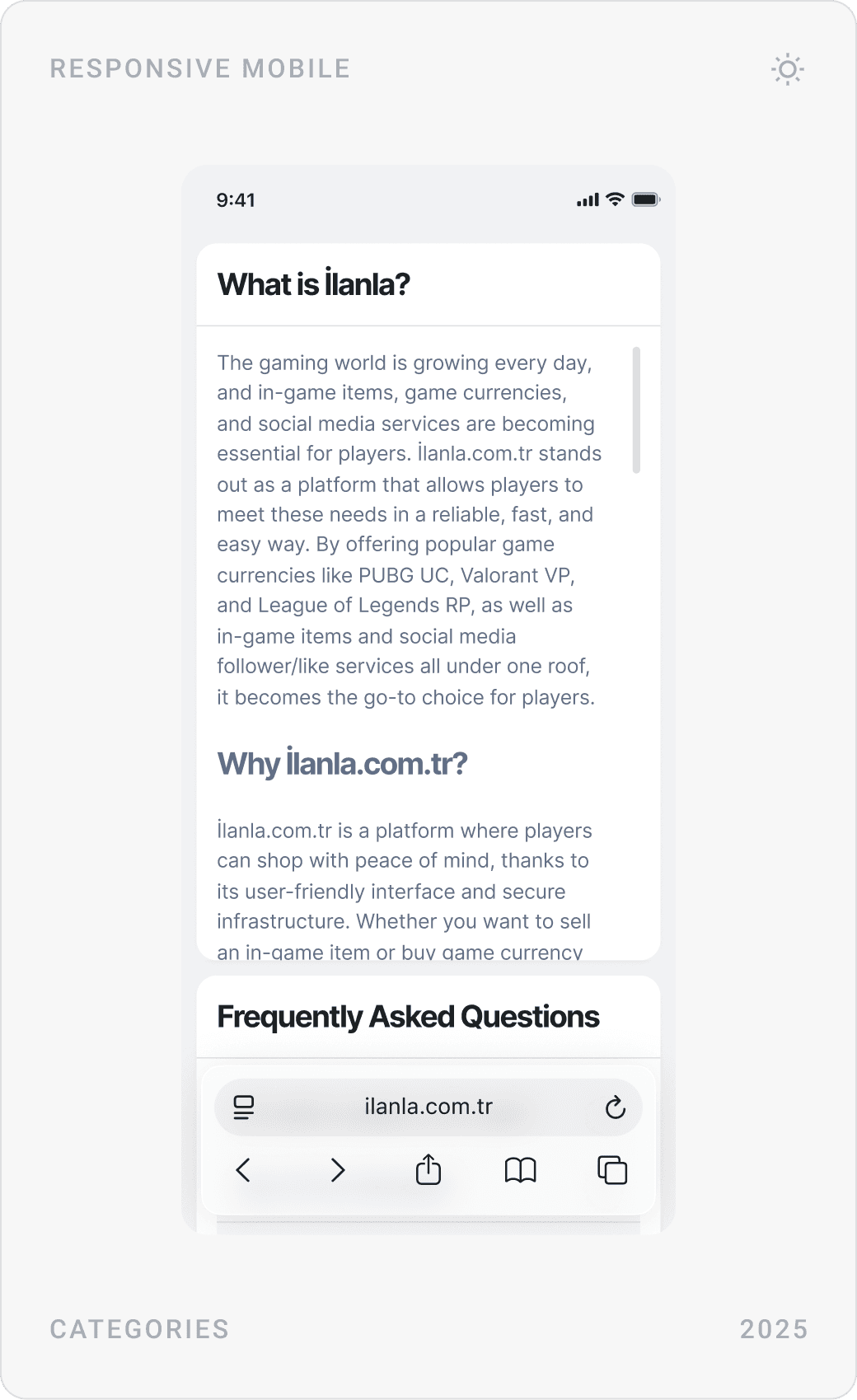
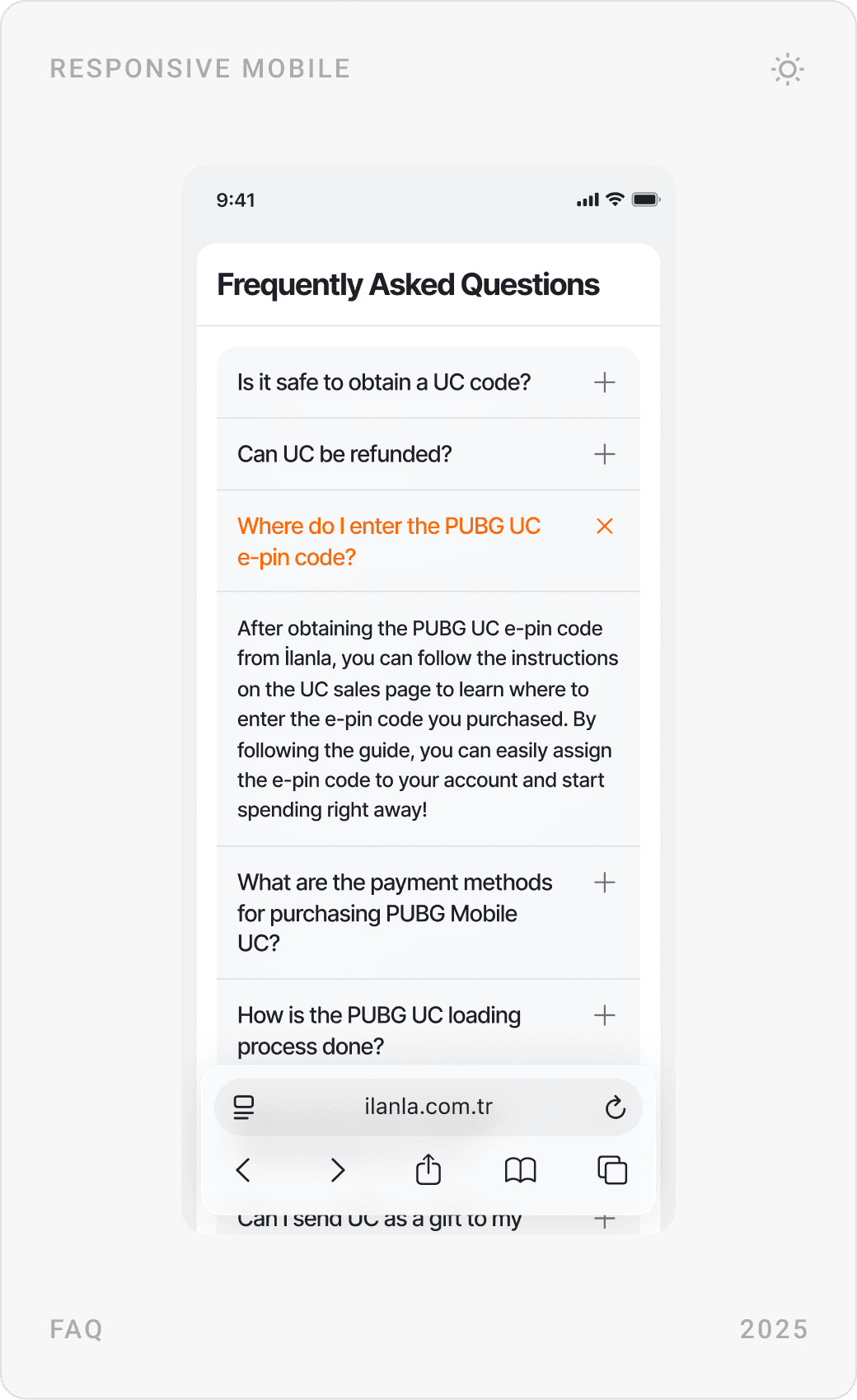
Category pages list packages side by side with price, quantity and a buy button, so comparing PUBG Mobile UC options takes seconds. Product pages show the details buyers check, platform, region, delivery, along with reviews and an FAQ, and SEO-friendly text explains each category.
Seller stores and trust badges
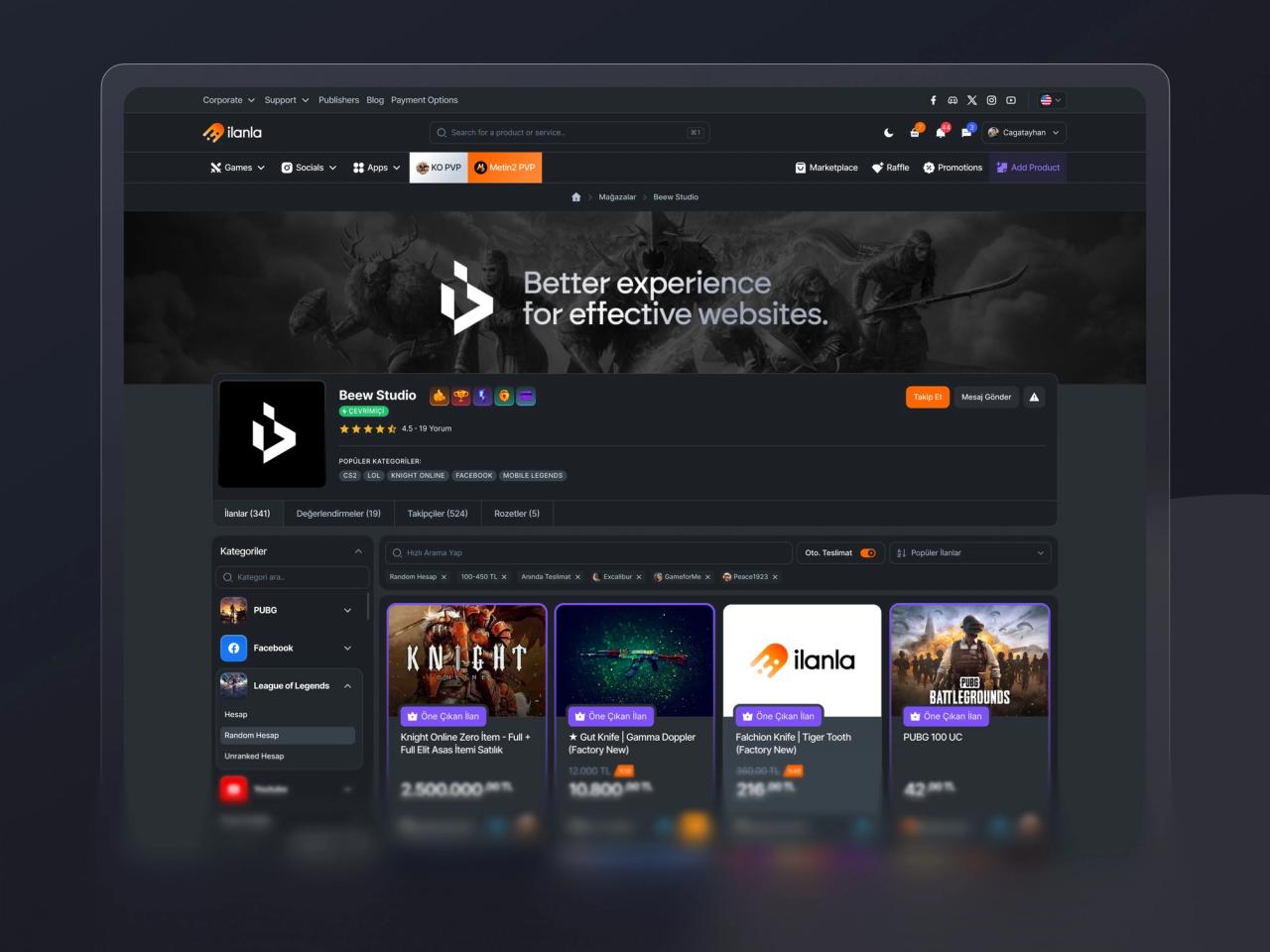
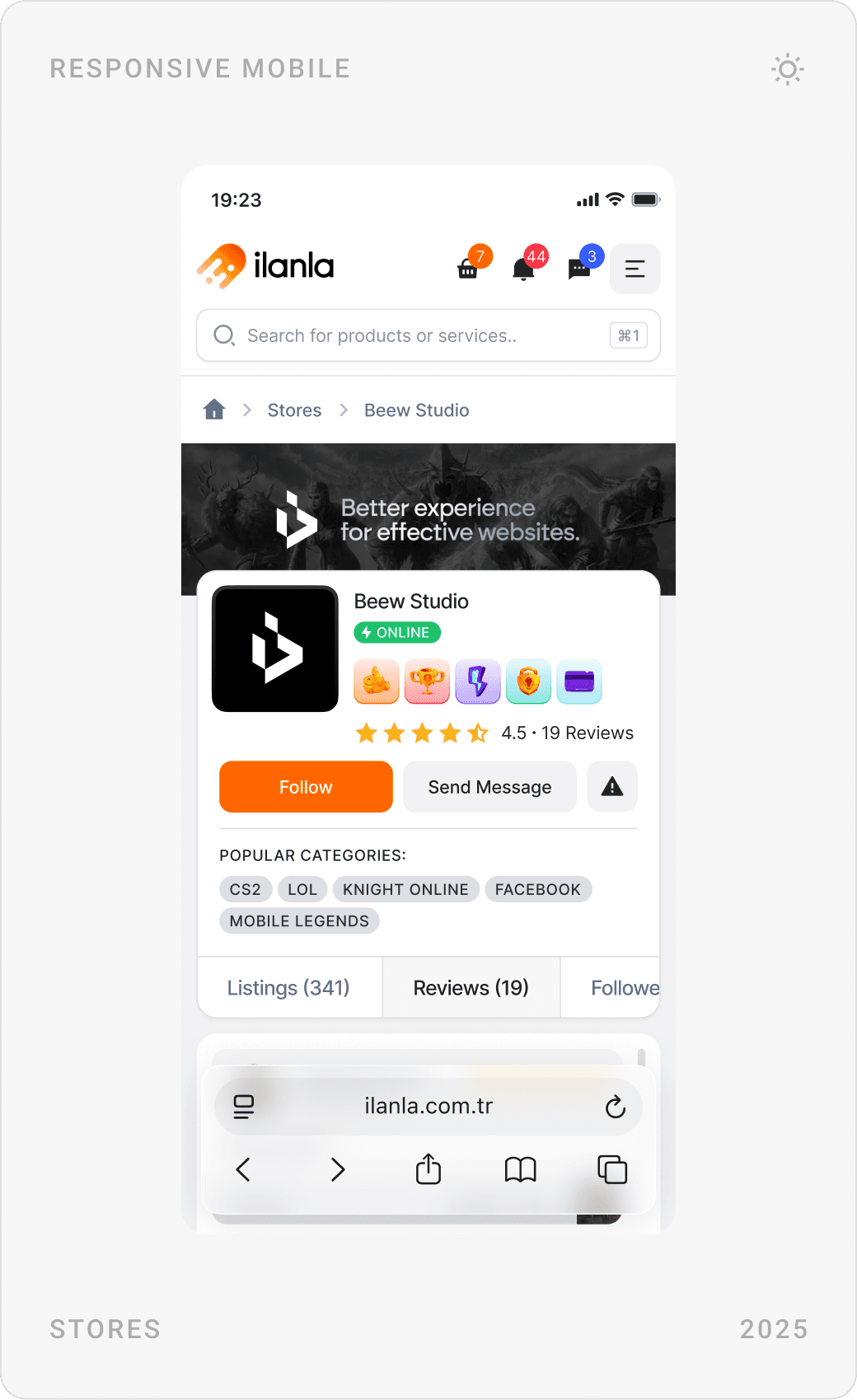
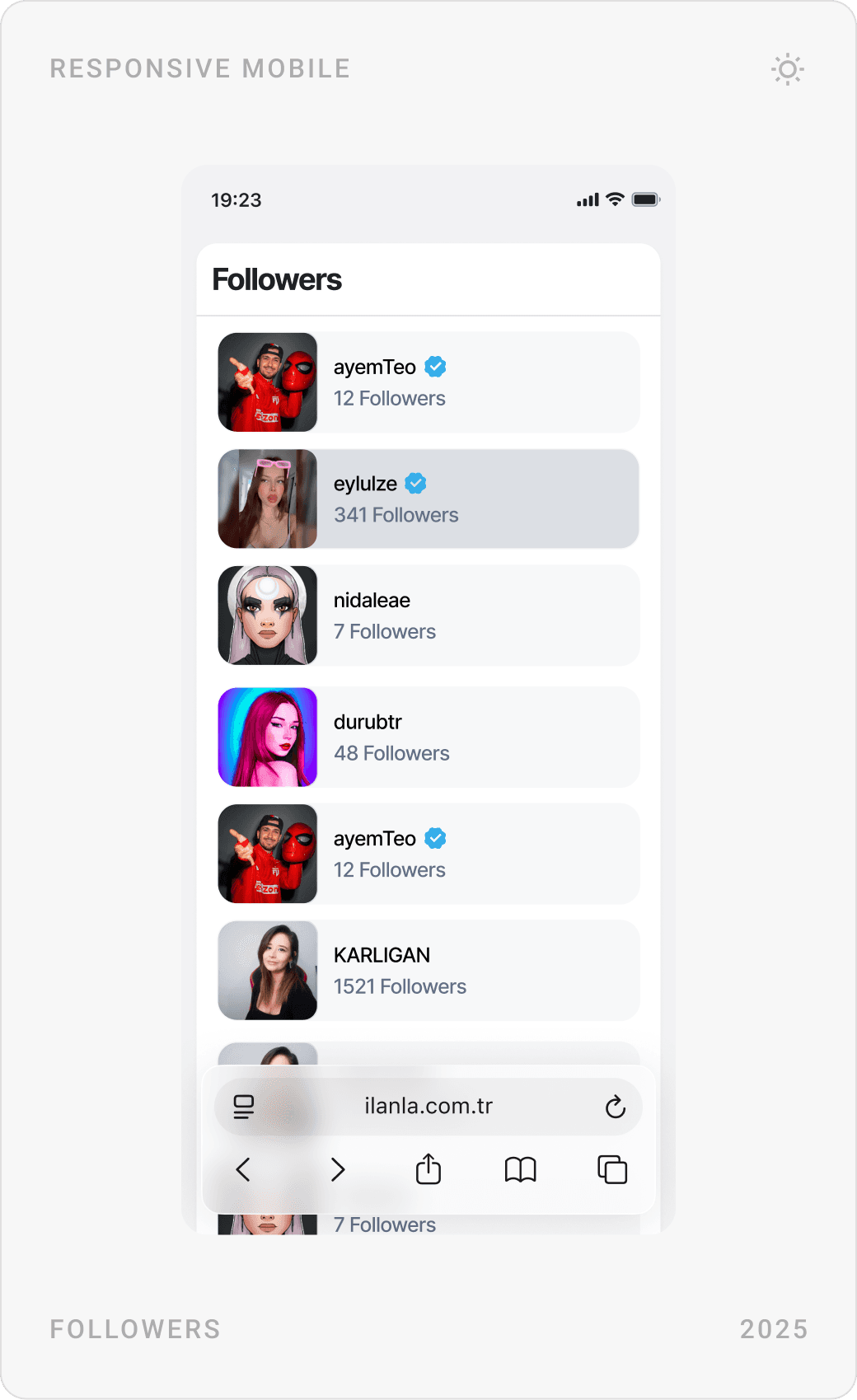
Every seller gets a branded store with a banner, logo, online status, badges, rating and review count, popular categories and tabs for listings, reviews and followers. The sample store uses my studio, Beew, as placeholder content.
Listings, cart and discounts
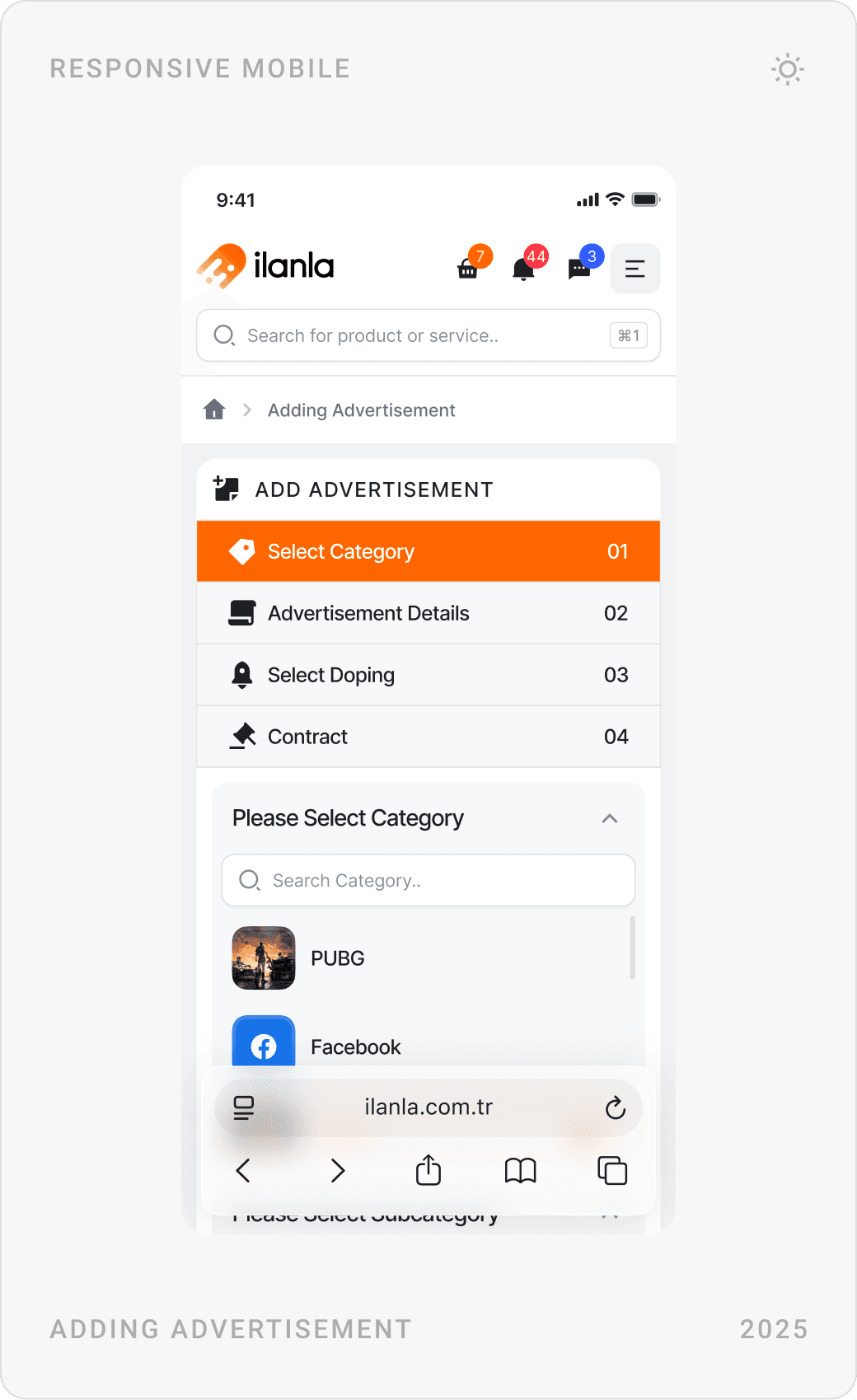
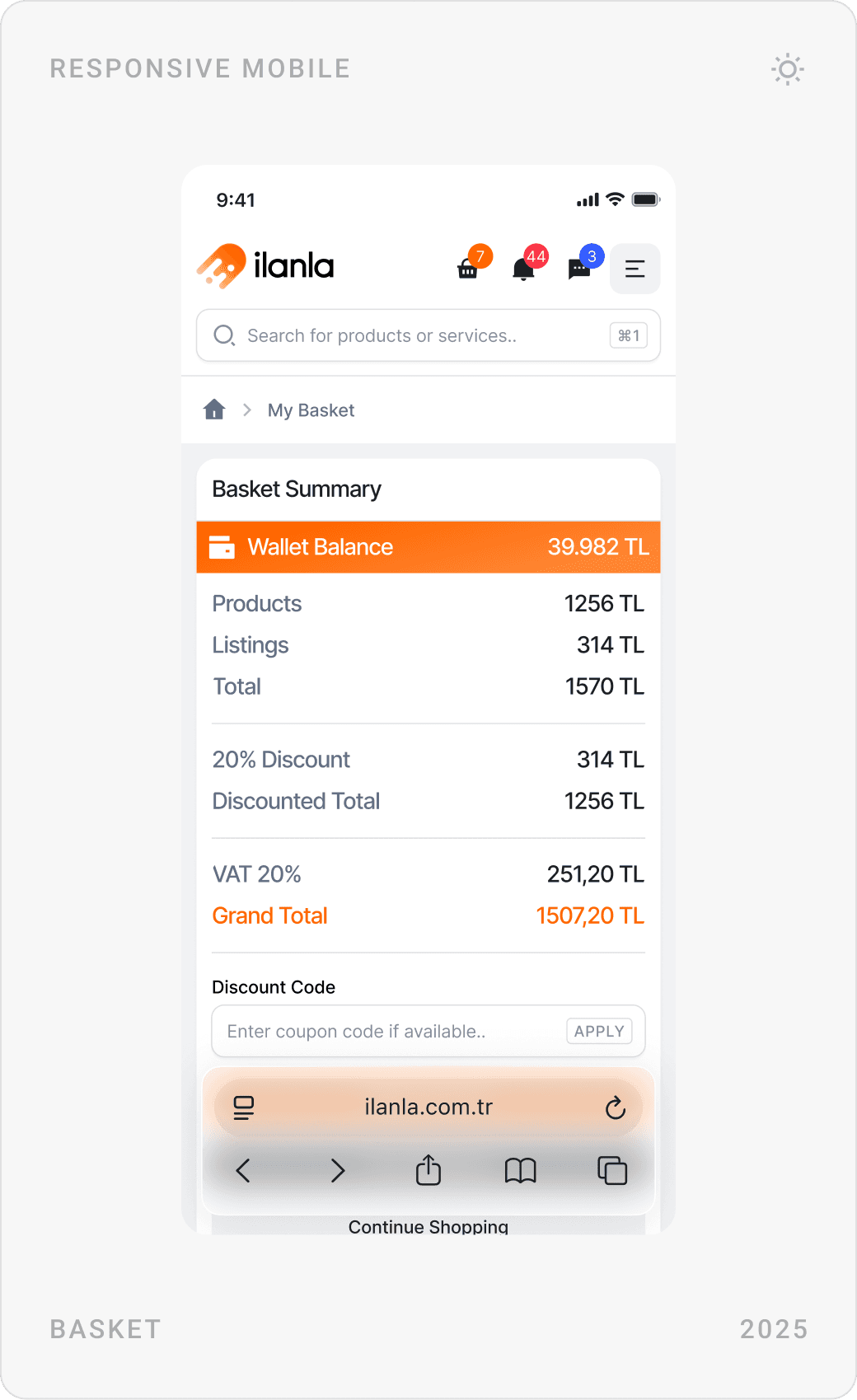
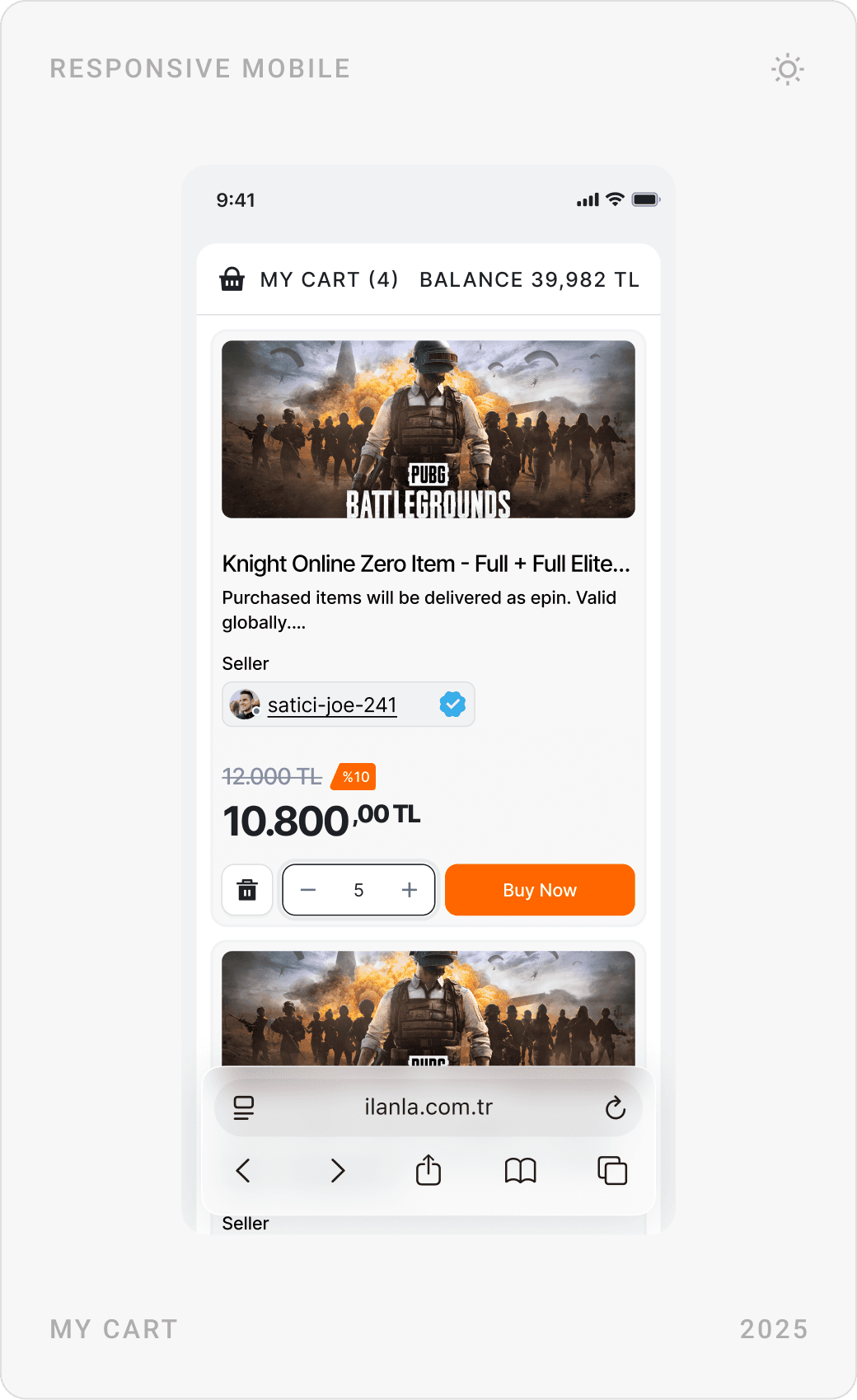
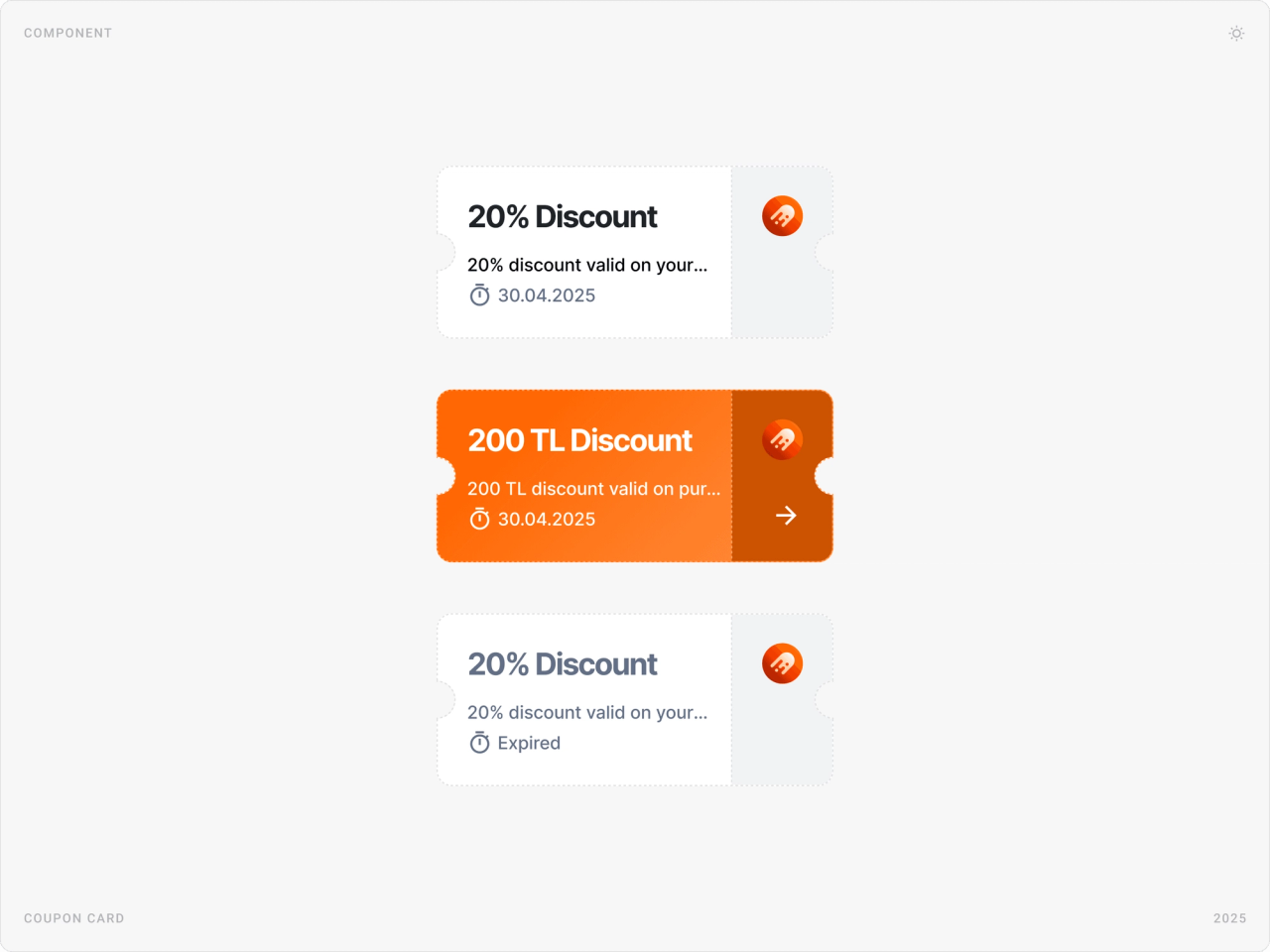
Sellers create a listing in four guided steps: category, details, selling options and contract. Buyers get a clear basket summary with discounts and VAT, a cart that shows their balance, and discount coupons with expiry dates.
Control panel and accounts
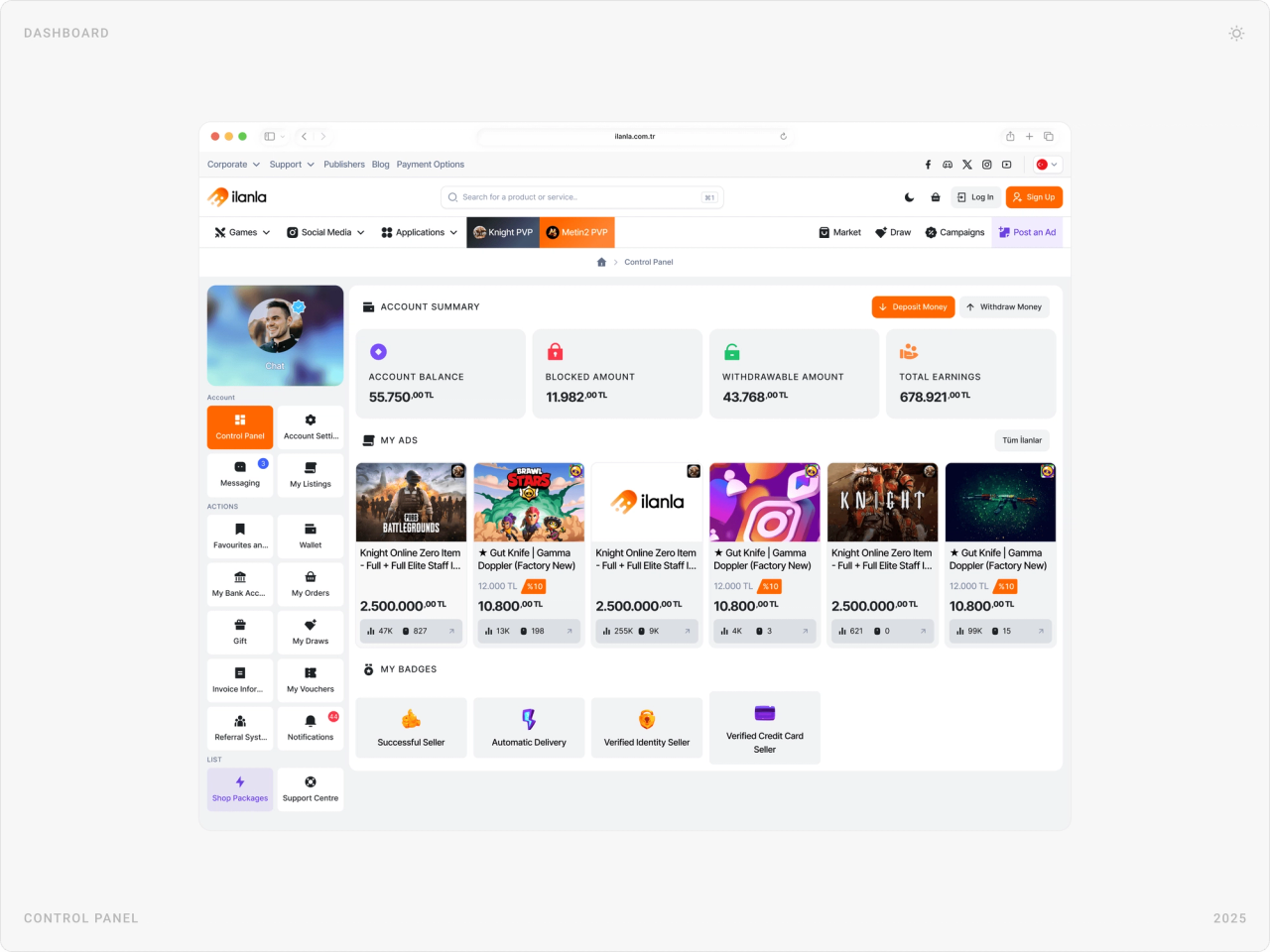
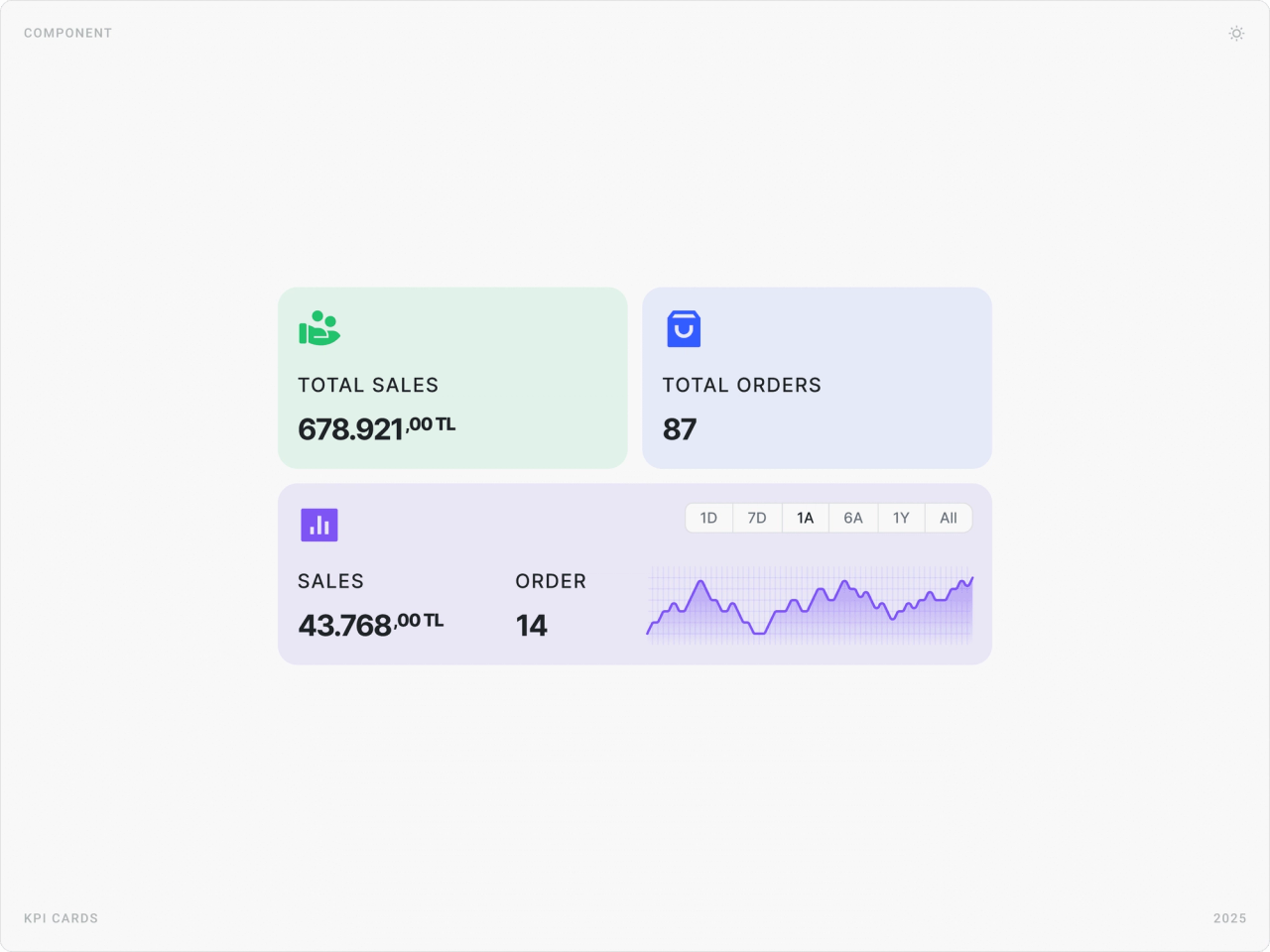
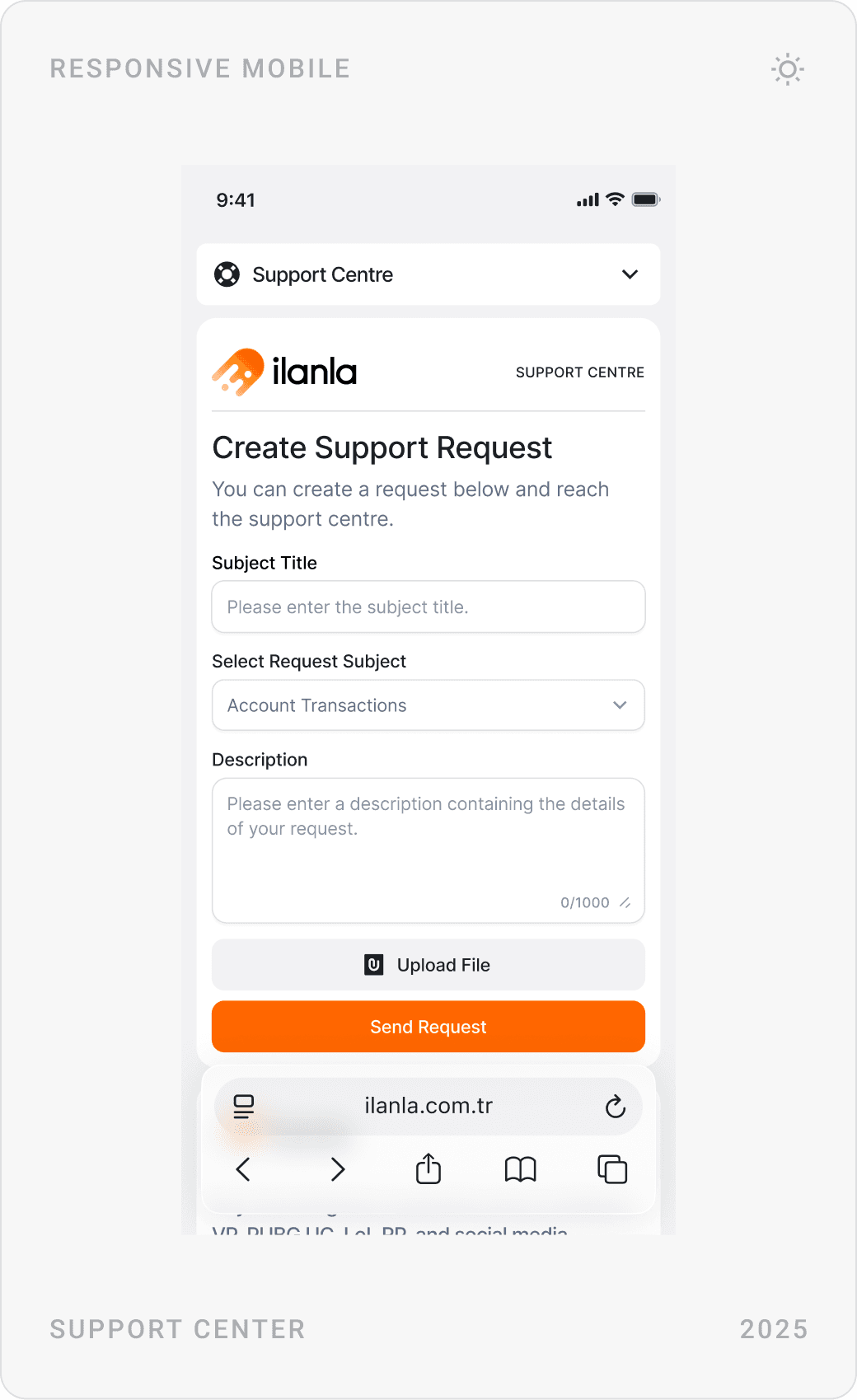
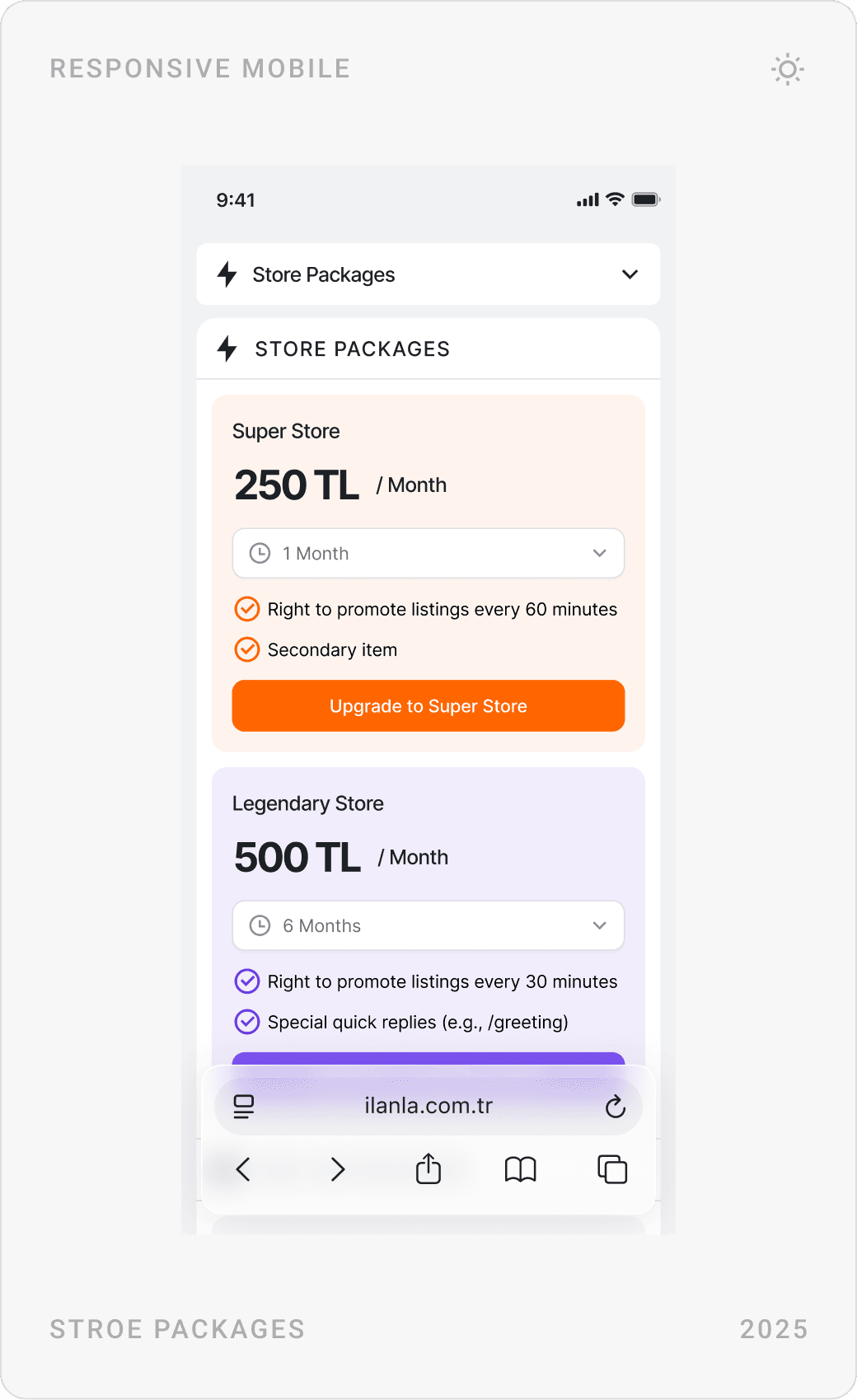
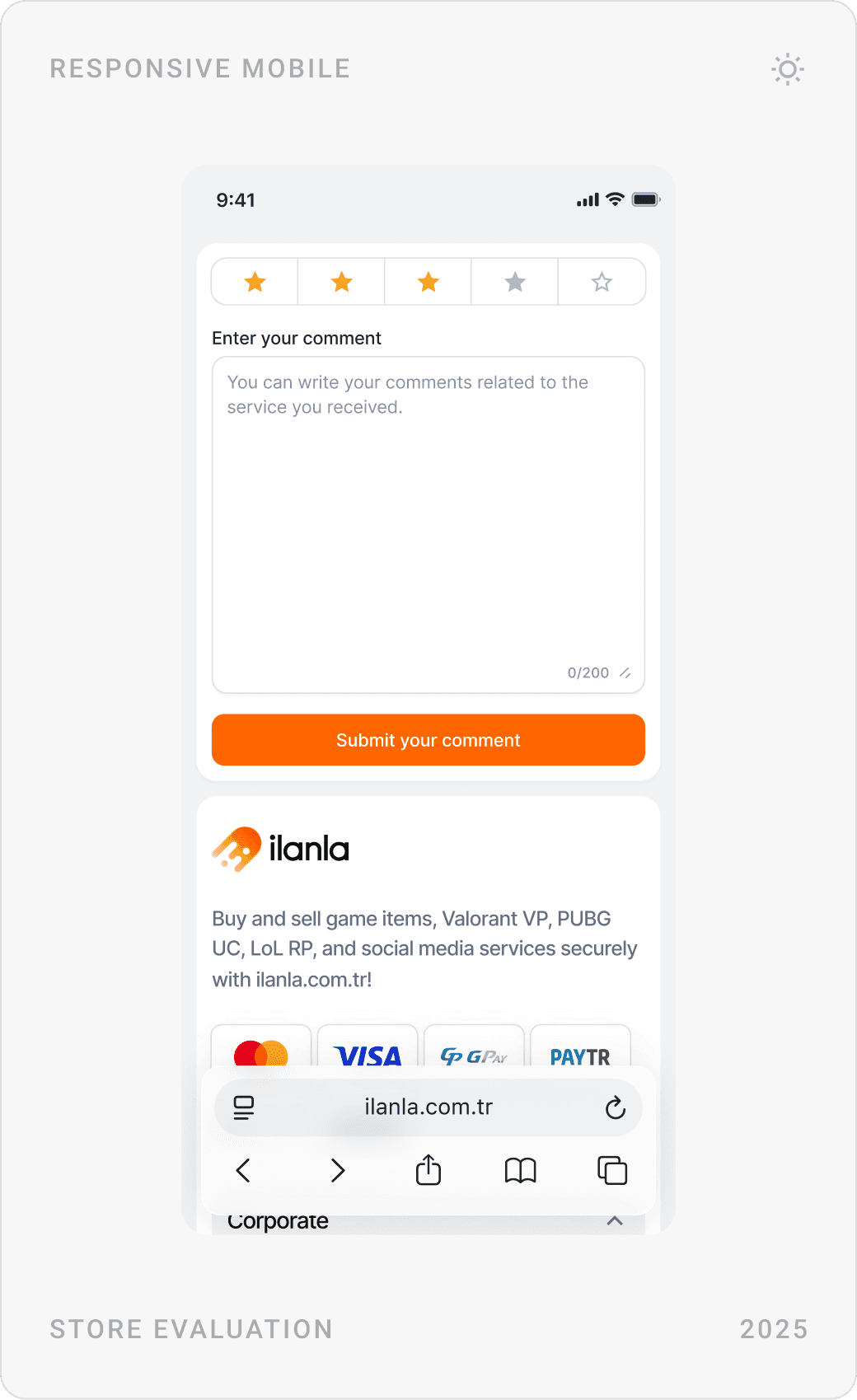
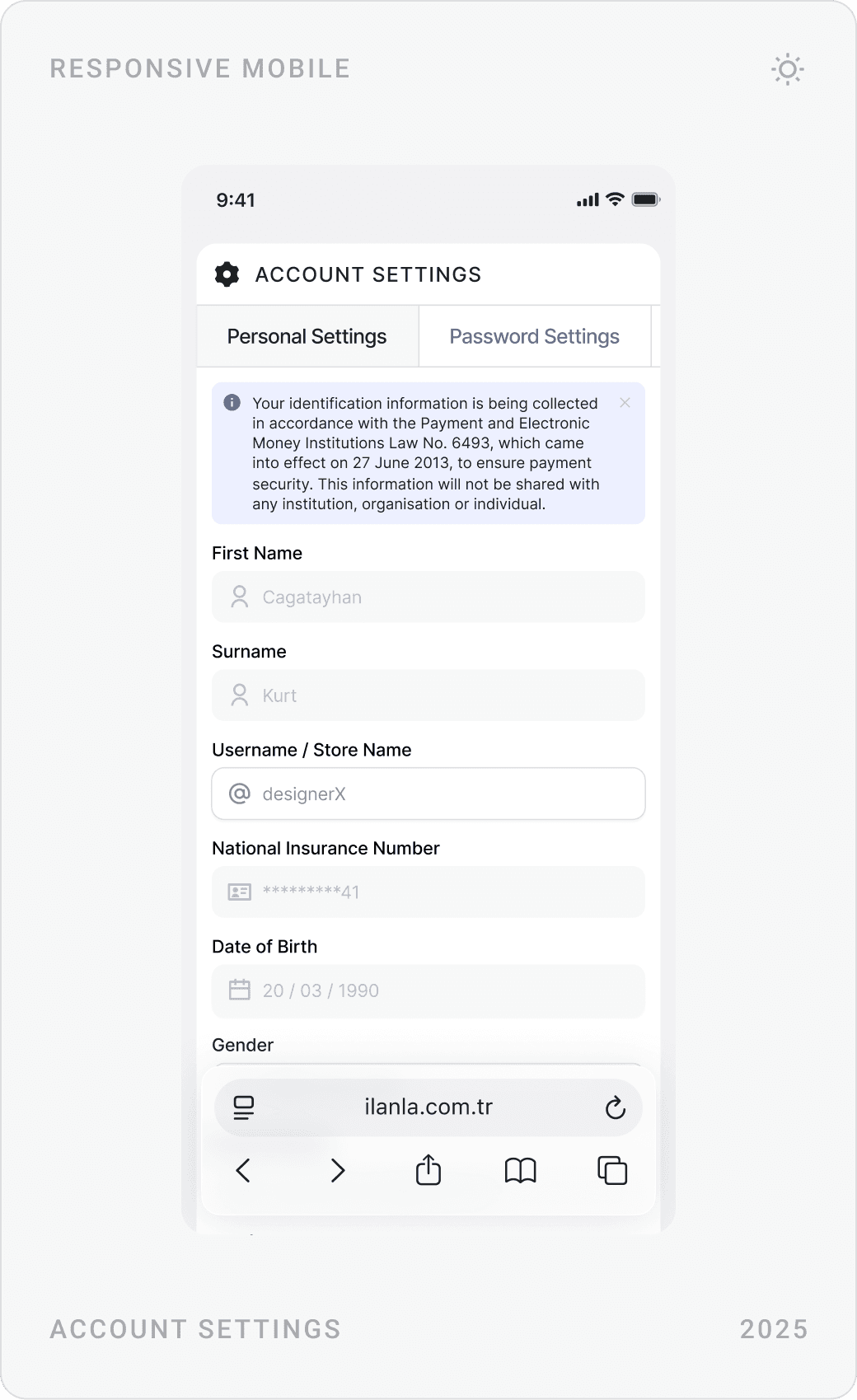
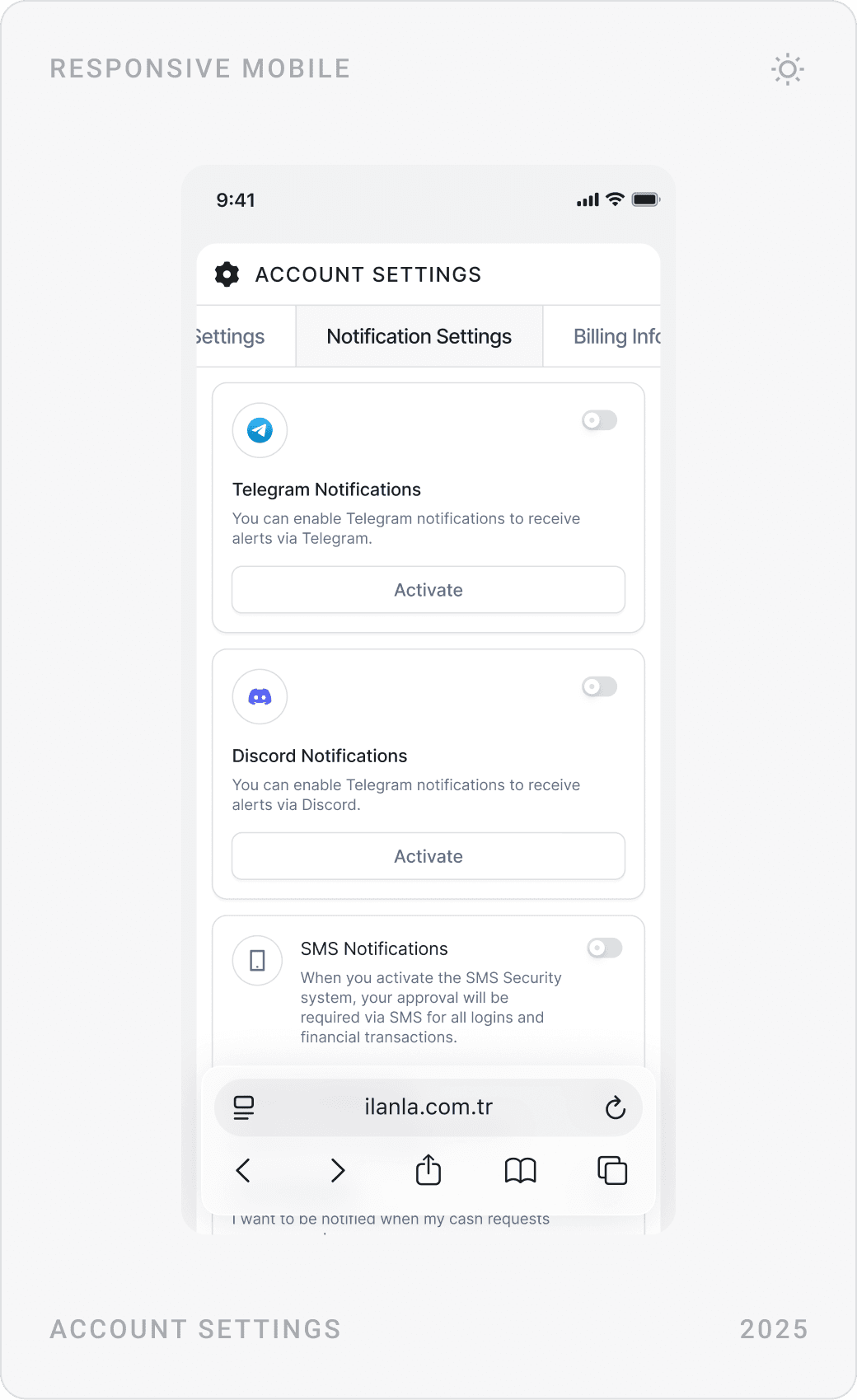
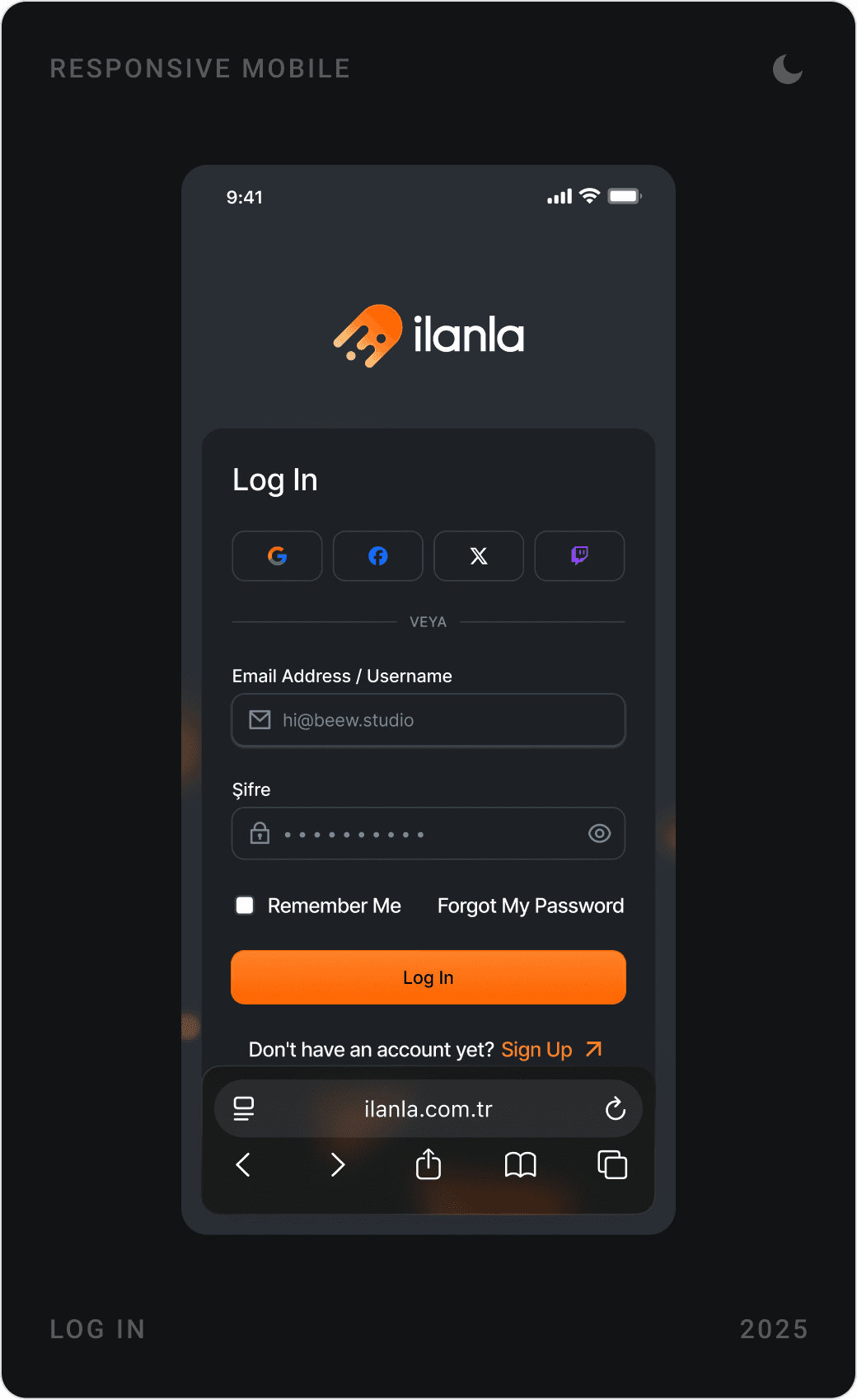
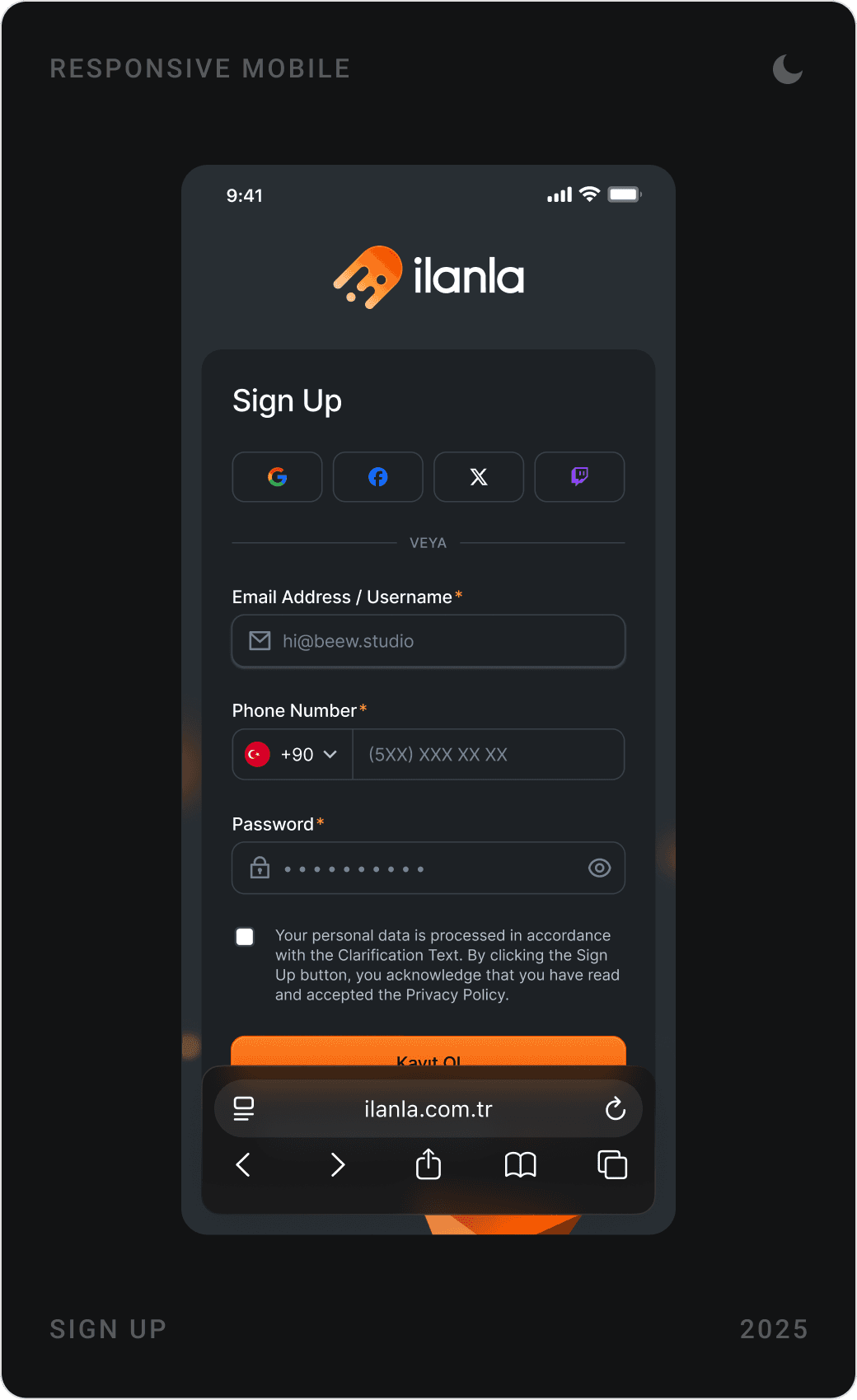
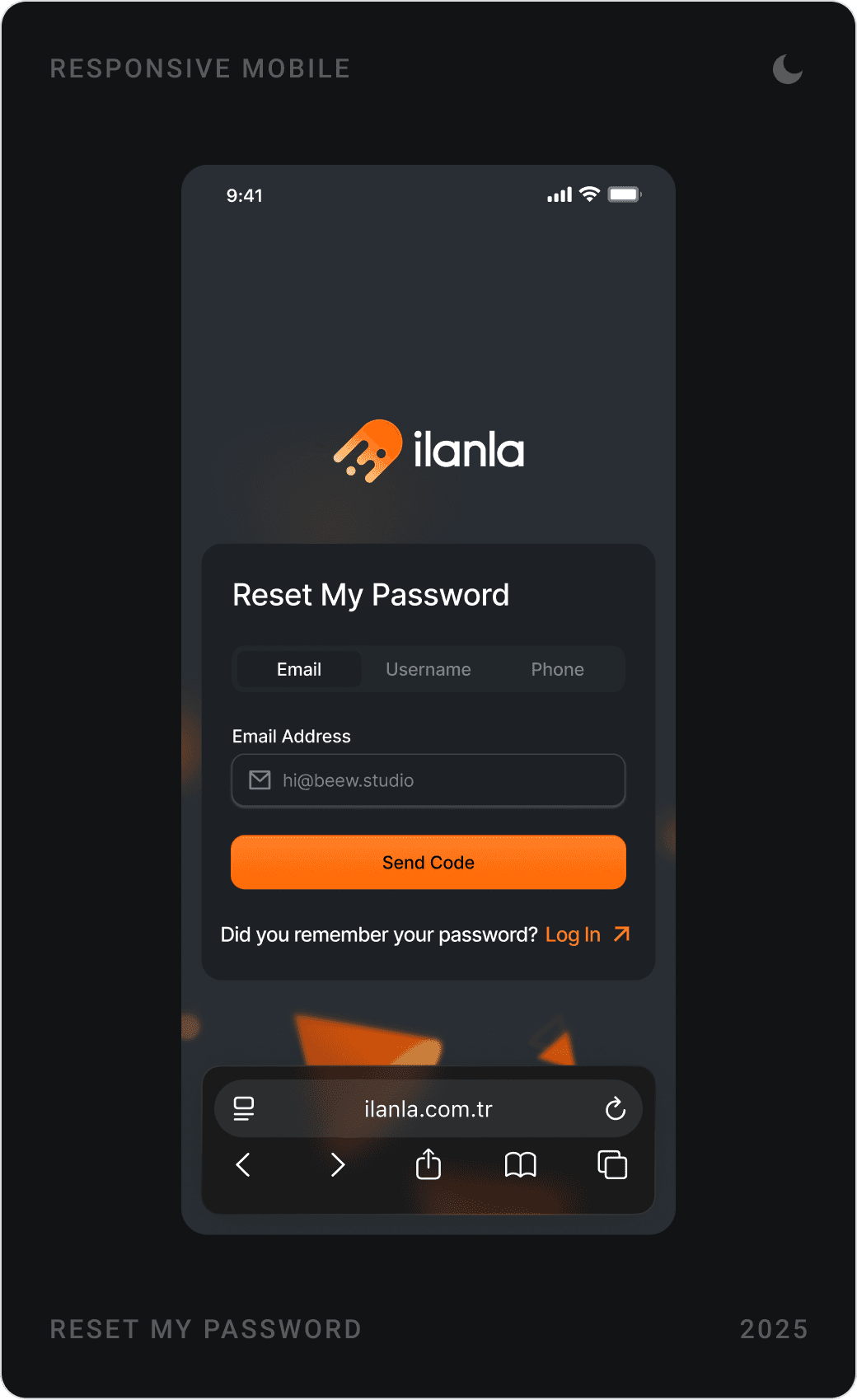
The control panel gives sellers an account summary, balance, blocked and withdrawable amounts, total earnings, with their listings, badges and sales stats. Messaging, favourites, store packages, support requests and account settings sit in the same panel, and sign-up, login and password reset support Google, Facebook and Twitch.
Blog
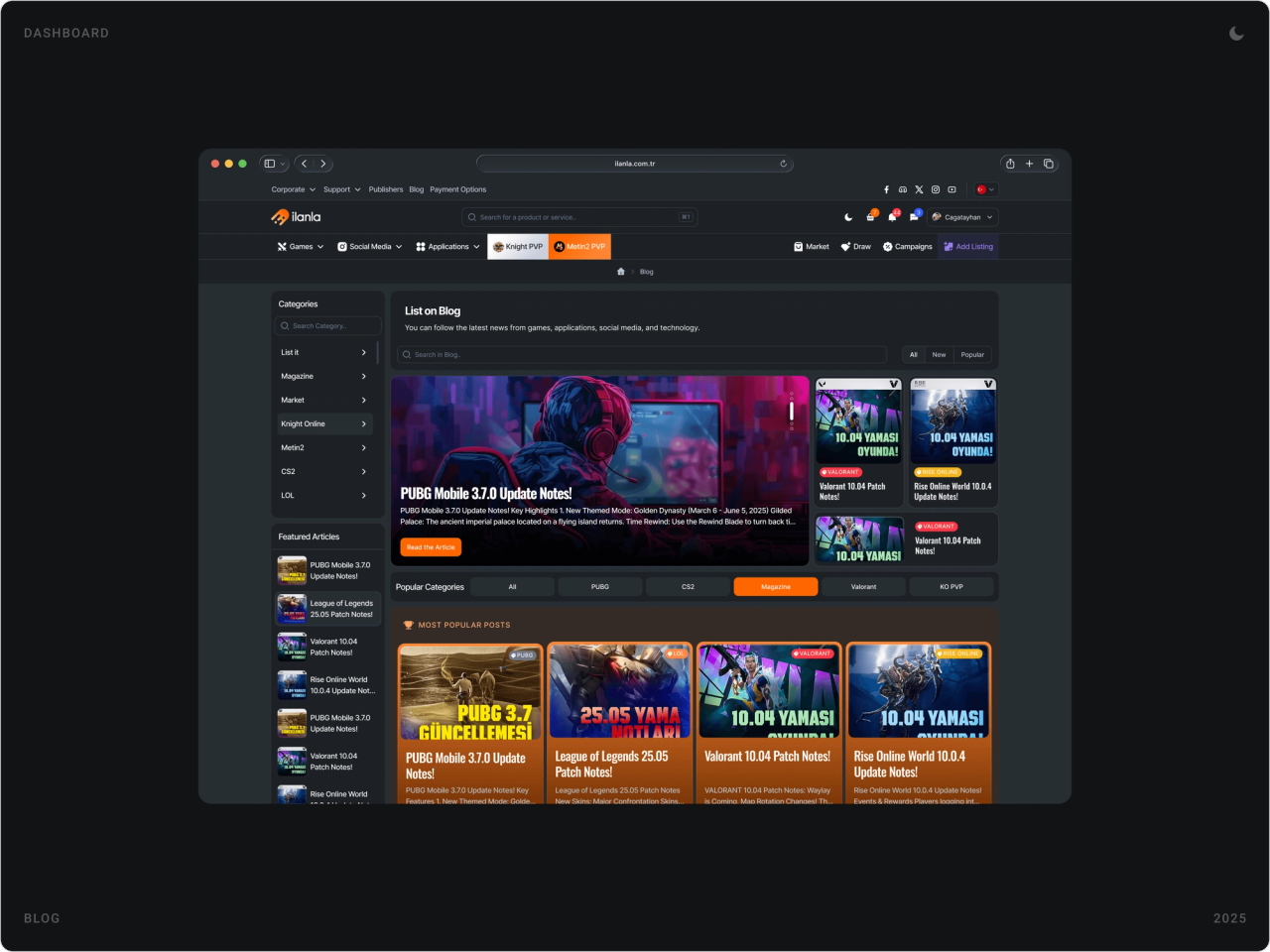
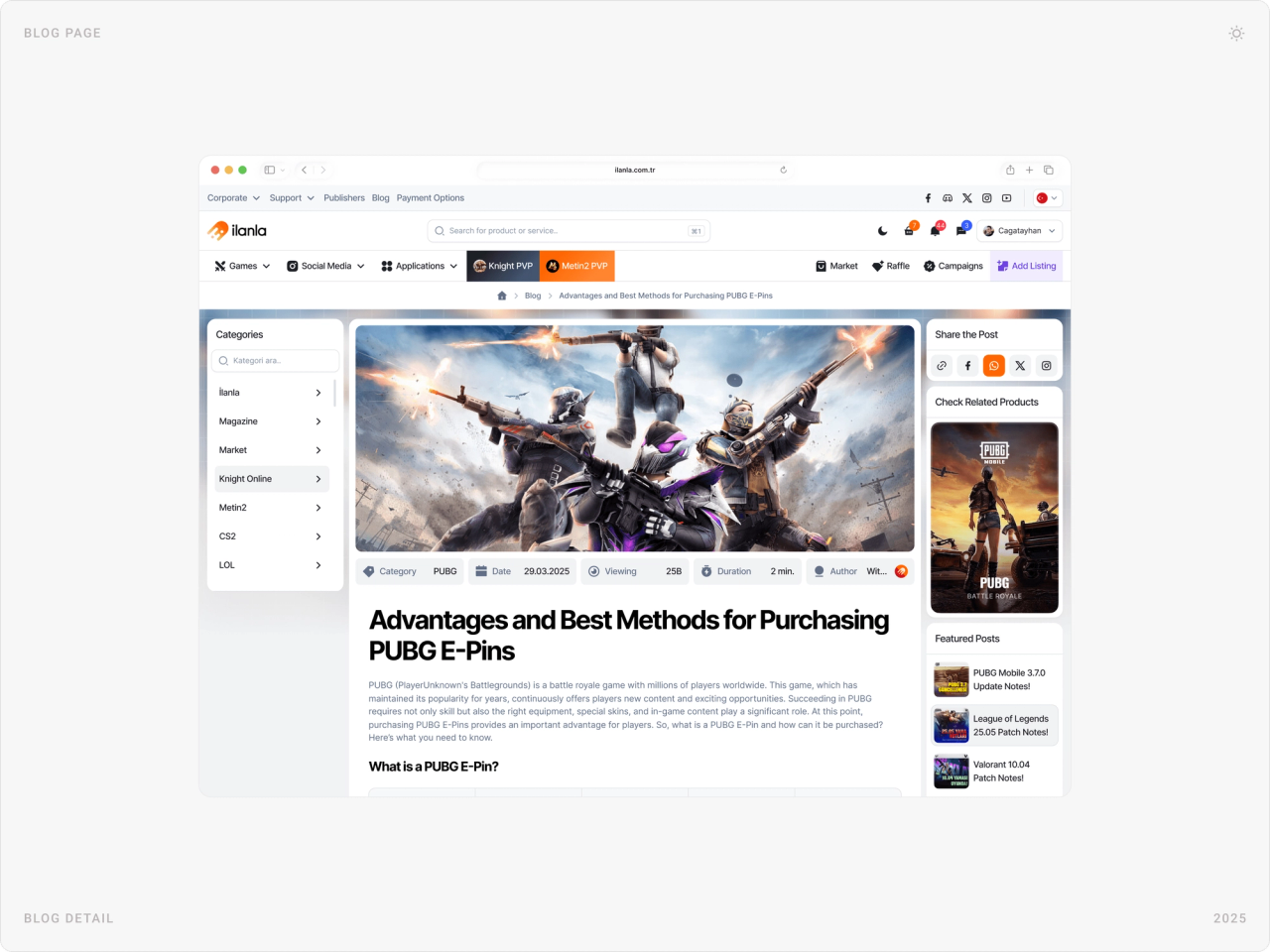
A blog with game and tech categories, featured posts and update notes such as PUBG Mobile 3.7.0 keeps gamers coming back between purchases. Article pages are laid out for comfortable reading and search, with related products beside the text.
Results
- More than 110 responsive screens designed in Figma, in light and dark themes.
- A marketplace system that covers everything from authentication to product fulfilment.
- A smooth journey for both buyers and sellers, with trust signals at every step.
- High visual fidelity and functional depth across the whole ecosystem, plus a new brand.
Key takeaways
- In peer-to-peer markets, trust belongs on the listing card, not only the profile.
- Organise the catalogue the way your users think: here, by game.
- Buyers and sellers should share one design language.
- Countdowns, badges and coupons work when they carry real information.
FAQ
What is İlanla?
İlanla is a Turkish digital marketplace for gamers. Users buy and sell in-game items, accounts, currencies and e-pins for titles such as Knight Online, Metin2, PUBG, CS2, League of Legends and Valorant, as well as social media services, through listings from verified, rated sellers.
What did you design for İlanla?
The brand (logo and app icon) and more than 110 responsive screens in Figma: homepage and daily deals, categories and product pages, seller stores with badges and reviews, sign-up and login, the control panel with sales stats, listing creation, cart, discounts, support, FAQ and the blog.
How long did the project take?
About four months in 2025, from research and the brand to the full set of desktop and mobile screens.
How do you design a trusted marketplace for in-game items?
Put trust signals on every listing, seller name, rating and verification badges, not only on profile pages. Organise the catalogue by game, show the details buyers check (server, rank, delivery type) on the product page, add reviews and visible support, and give sellers a clear panel for listings, orders and earnings.
Can you design a marketplace or e-commerce product for my company?
Yes. I work with marketplace, e-commerce, AI, SaaS, fintech and Web3 teams on product UI, websites, brands and design systems. Book a call or send a message from the contact page.
Sources
Have a product to design?
I help teams turn complex products into websites and interfaces people understand in seconds. Tell me about yours.